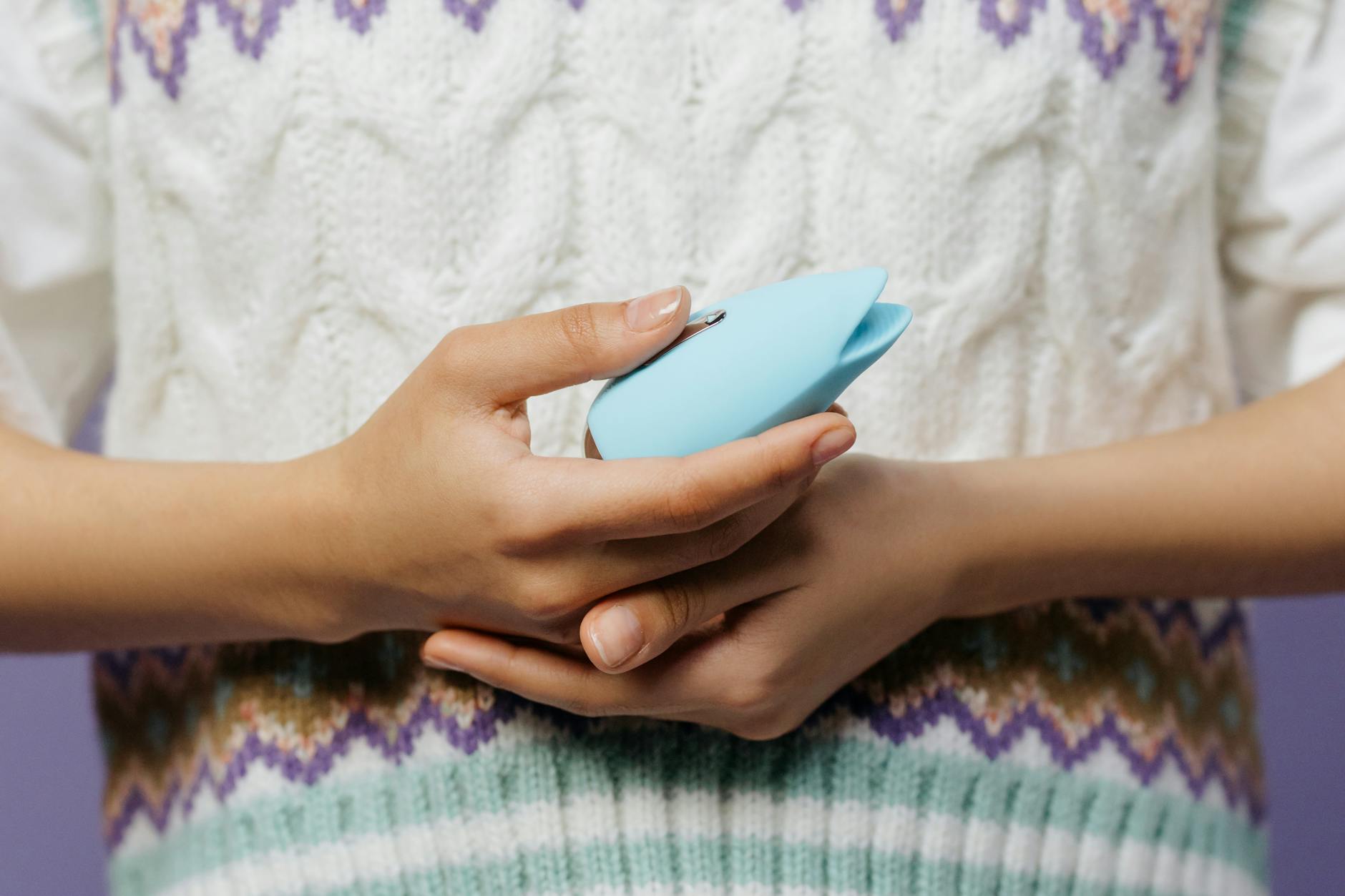
Here's what perimenopause actually does to pleasure
Perimenopause is not menopause. It's the 5-10 year runway leading up to it, when your hormones start fluctuating like a broken dimmer switch. One week you're fine. The next, arousal takes forever. Your clitoris feels numb. Your skin is sensitive. Nothing feels the way it used to, and nobody talks about this part.
The good news: it's not permanent, it's not broken, and it's incredibly responsive to the right approach. A lemon vibrator (or any clitoral vibrator designed for nuance) becomes genuinely useful here because suction-based stimulation works differently on shifting tissue than friction-based toys do.
Here's what you need to know to navigate pleasure during this transition.
What hormonal fluctuation does to sensation
During perimenopause, estrogen is erratic. Some days it's high, some days it crashes. This directly affects three things: blood flow to the clitoris, the thickness of vaginal and clitoral tissue, and how quickly your nervous system registers touch.
When estrogen dips, tissue gets thinner and less engorged. That means the clitoris doesn't swell as dramatically before arousal, and stimulation that felt perfect last month suddenly feels either too intense or too gentle. Your sensitivity is genuinely changing, not imagined.
This is also why arousal takes longer. Your body needs more time to build the kind of blood flow and engorgement that makes pleasure accessible. What used to take 5-10 minutes might now take 15-20. That's not a deficit. It's just the new timeline.
Why a lemon clitoral vibrator works better during this phase
Traditional vibrators rely on friction. If your tissue is thinner or more sensitive, friction can feel sharp or uncomfortable. A lemon vibrator uses suction and gentle pulsing, which stimulates the nerve clusters around the clitoris without the same mechanical pressure.
Suction-based toys like the Lemon are particularly good during perimenopause because they:
- Don't depend on friction, so thinner tissue doesn't feel raw or irritated
- Create a gentle seal that increases blood flow without being painful
- Allow you to control intensity more granularly (most start at pattern 1-3)
- Feel responsive to skin that's become more temperamental
The lemon clitoral vibrator's design makes it easier to use the right amount of pressure during a phase when "right" is moving targets.
How to adjust your technique as sensation shifts
Four practical changes that most people need during perimenopause:
Start lower and slower. If you used to jump to pattern 5 on your lemon vibrator, begin at pattern 1 or 2. Spend 5 minutes there. Your clitoris will tell you when it's ready to intensify. Rushing compounds the numbness.
Add more warm-up time. Give yourself 15-25 minutes before using your clitoral vibrator. This means actual foreplay, arousal time, or solo exploration. Blood needs time to move. Rushing makes everything feel numb.
Use water-based lubricant. Even if you never needed it before, the texture change during perimenopause often makes external lubrication helpful. It changes how suction feels and can make stimulation more comfortable on sensitive tissue.
Build micro-sessions into your routine. If long sessions feel frustrating because sensation is inconsistent, try 3-5 minute check-ins throughout the day or week. You're not aiming for orgasm every time. You're retraining your nervous system to recognize pleasure signals that are now quieter.
The mental adjustment that matters more than technique
Honestly, the hardest part of perimenopause isn't physical. It's the grief of your pleasure landscape changing without your permission.
For 20-30 years, you knew how your body worked. You understood what turned you on, how long it took, what orgasm felt like. Perimenopause rewrites all that. And for most people, the first reaction is shame, frustration, or resignation. "I'm broken. I'm getting old. This is just what happens."
None of those are true.
What actually happens is that your body is shifting into a new baseline. That baseline is not worse. It's different. And once you work with it instead of against it, the pleasure is often richer because it requires attention, intention, and self-knowledge.
If you have a partner, this is also the moment to have a direct conversation that's not about sex. It's about: "My body is changing. I'm learning what helps. I want us to explore this together." Separating the physical information from the emotional connection prevents both conversations from drowning.
When clitoral sensitivity changes across your cycle
During perimenopause, you might still be cycling, but the cycle is chaotic. Some months you ovulate, some you don't. This means your sensitivity might shift day to day in ways that don't follow the pattern you remember.
One approach: track what works. Use your lemon vibrator on different days and notice if you're more or less sensitive. You don't need a clinical tracking system. Just mental notes: "Pattern 3 felt great Tuesday, but Friday it was too much." This information helps you adjust in real-time instead of assuming you're broken.
Many people find that right after a period (if you're still having them), sensitivity is more predictable. That's not a coincidence. It's estrogen rebounding. If you're looking for "good days" to prioritize pleasure, those are often them.
Dealing with numbness and disconnection
Some people experience temporary clitoral numbness during perimenopause. Not pain. Not sensitivity. Just deadness. Your lemon vibrator won't magically fix this, but it can help you work with it.
If numbness shows up:
- Don't push harder or use higher intensity. Numbness usually gets worse with force.
- Spend more time on lower settings. Your nervous system needs gentler retraining.
- Mix in solo time without any toy. Sometimes your hand and your attention are enough to wake things up.
- If it persists beyond a few weeks, check in with your doctor. This can sometimes signal something worth addressing directly (low estrogen, medication side effects, thyroid changes).
Numbness during perimenopause is temporary in most cases. It's your nervous system recalibrating, not failing.
The role of lube when everything feels different
You might have never needed external lubricant before perimenopause. Now you do. Or you used it sometimes, and now you need it constantly. Or it never worked for you, and suddenly it does.
Water-based lube is the right choice if you're using a lemon clitoral vibrator (silicone lube can degrade silicone toys). Apply it generously to the external clitoris and the head of the vibrator. Let it sit for a few seconds. The seal created by lube plus suction feels different than suction alone. More glide. Less stick. For many people in perimenopause, that difference is the gateway back to pleasure.
When to seek support
If numbness, pain, or complete loss of arousal persists for more than a month, or if you're experiencing other perimenopause symptoms (hot flashes, mood shifts, sleep disruption), a conversation with your doctor or a perimenopause specialist can help. Sometimes hormone levels need checking. Sometimes medication adjustments help. Sometimes it's just permission and information.
There's also real value in talking to a sex-positive therapist during this transition. Not because anything is wrong with you, but because navigating major physical change with a partner (or alone) often benefits from external guidance.
FAQ: Pleasure and perimenopause
How long does it take for sensation to stabilize after perimenopause starts?
It varies. For some people, sensitivity shifts monthly for years. For others, it settles within 6-12 months. The key is that instability is temporary. Your body isn't permanently changing in one direction. It's fluctuating, and that eventually levels out.
Can I use my lemon vibrator the same way I did before perimenopause?
Probably not right now, but you might be able to in a few months. Your technique should follow your sensation, not a preset pattern. Check in with yourself every few weeks and adjust. As hormones stabilize, you'll likely rediscover your previous preferences. Or you'll find new ones that feel even better.
Is it normal to need more lubrication now?
Completely normal. Estrogen supports natural lubrication. When it fluctuates, external lube becomes essential. You're not broken. You're just working with the body you have right now.
Will my orgasms come back to normal?
Yes, usually. Orgasms during perimenopause often feel softer, shorter, or require more work. That often reverses. And for many people, once hormones stabilize post-menopause, orgasms become stronger and more reliable than they were before. You're in a temporary phase, not a permanent loss.
Can antidepressants or birth control make perimenopause pleasure issues worse?
Absolutely. Hormonal birth control can mask or exacerbate perimenopause symptoms. Some antidepressants affect sensation directly. If you're on either and pleasure has shifted dramatically, bring this up with your doctor. Adjustments exist.
Should I try a different type of vibrator if my lemon vibrator isn't working right now?
Not necessarily. Give yourself 2-3 weeks of adjusted technique first (lower intensity, more warm-up, lube, longer foreplay). If sensation still isn't there, you might explore a toy with different stimulation (like a wand), but the issue is usually technique, not the toy. Your lemon clitoral vibrator is likely still the right tool. You're just using it in a new phase.
You're not losing pleasure. You're reclaiming it.
Perimenopause feels like a betrayal because your body changed without asking permission. But this phase is also an invitation to rebuild your relationship with pleasure on completely honest terms. Not the template you inherited. Not the pace your partner sets. Not the pressure of before. Just what actually works for you right now.
A lemon vibrator is a practical tool in that rebuilding. But the real work is paying attention, adjusting, and trusting that your capacity for pleasure hasn't left. It's just reorganizing. And often, what emerges on the other side is deeper, more intentional, and harder to shake than anything before.