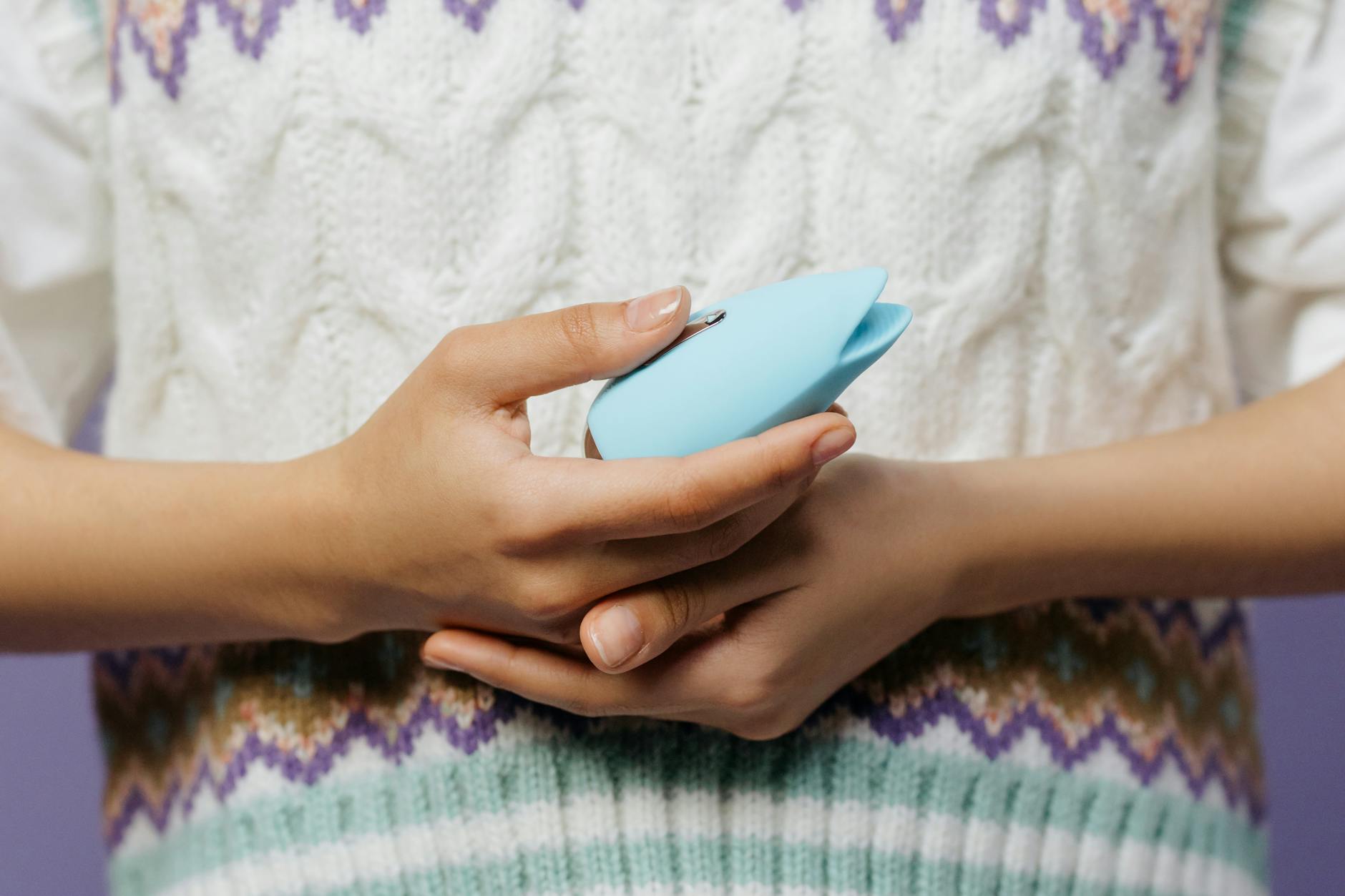
How to Use a Lemon Vibrator When Pleasure Returns Differently After Hormonal Shifts
Let's be real. Hormonal changes hit different. Whether it's coming off birth control, navigating perimenopause, or just the slow shifts that happen across decades, your body doesn't respond the way it used to. Arousal takes longer. What used to feel amazing now feels numb. Or sometimes the opposite—sensation is suddenly more intense. And the anxiety that comes with that strangeness? That can kill the mood faster than anything physical.
Here's what I tell my clients: pleasure hasn't left you. It's reorganized. And when you understand how, reconnection becomes possible.
The Lemon Vibrator, with its clitoral suction design, is particularly effective during these transitions because it works with your nervous system's new patterns instead of fighting them. It doesn't require the same direct friction that can feel overwhelming on sensitized tissue, and it builds sensation in a way that often feels more natural when arousal is slower to develop.
What actually happens to pleasure when hormones shift
Your nervous system didn't break. Your hormones—primarily estrogen and testosterone—changed the way your tissues respond to touch. When estrogen drops, clitoral tissue becomes thinner and more sensitive in some spots while less responsive in others. Blood flow changes. Lubrication patterns shift. The timeline for arousal gets longer.
Most people panic because they assume this means sensation is gone for good. It's not. It's reorganized.
I worked with a client recently who came off hormonal birth control after eight years. Within weeks, her arousal response changed completely. What felt like a reliable 10-minute warm-up suddenly took 20-30 minutes. When we talked through it, she realized she wasn't numb—she was just building differently. Once she stopped fighting her new timeline and started working with it, pleasure came back even stronger than before.
That's the shift we're making here.
Why clitoral suction works better when sensation feels unpredictable
Clitoral vibrators using direct vibration can feel jarring when hormonal changes have made tissue more sensitive or when arousal is building differently. A lemon clitoral vibrator uses suction and pulse patterns that are gentler but more stimulating in a way that mirrors natural arousal patterns.
Here's the practical advantage: suction builds sensation gradually instead of assaulting the nerve endings. It creates a progressive intensity curve that often feels more in sync with how your body is responding now. You're not fighting sensitivity. You're using it.
Many of my clients report that the pattern modes on a lemon sucker feel almost meditative compared to traditional vibrators—like the toy is working with the rhythm of arousal instead of trying to override it.
Your reassessment roadmap: timing, pressure, and sequence
When your body has changed, you need to rebuild the map of what works. This isn't punishment. This is actually an opportunity to learn your body at a deeper level.
Start with timing
Don't assume your old warm-up window applies anymore. Budget 20-30 minutes before introducing any toy. This means actual foreplay, mental focus, or solo exploration. Your nervous system needs that runway now. Use it.
When you introduce the Lemon Vibrator, start on the lowest intensity mode. Many people jump to mode three or four out of habit. Your body needs to relearn what feels good. Lowest setting first. Always.
Layer in pressure gradually
With hormonal shifts, the clit is often more sensitive around the sides and less responsive at the very tip. Experiment with how the suction sensation moves across different parts of the clitoral area. You might discover that slightly off-center contact now feels incredible while direct tip stimulation feels too intense.
This isn't about the toy being wrong. It's about your new landscape. Mapping it is part of the pleasure.
Follow the sequence that works now
Your old sequence (maybe: direct stimulation > patterns > orgasm) might not be your new one. Some of my clients find that starting with the pulsing patterns actually builds arousal faster now than jumping straight to suction. Others need the opposite—a minute of suction to warm up, then patterns.
There's no universal timeline. Your timeline is the only one that matters.
Reconnection rituals that actually help
When pleasure has felt unpredictable or distant, the anxiety layer can be bigger than the physical one. You need a practice that says to your nervous system: this is safe, this is for you, sensation is coming.
Solo exploration first
If you have a partner, do this alone first. No performance pressure, no timeline, no one else's rhythm. Spend 15-20 minutes with the Lemon Vibrator in a comfortable space with low lighting and zero distractions. Your only job is to notice what feels different now.
Notice where sensitivity has increased. Notice where you're numb. Notice the speed of arousal building. Don't judge it. Just observe.
This isn't about achieving orgasm. This is about becoming fluent in your new body.
Rebuild with a partner at your pace
If you're partnered, tell them: I'm relearning my pleasure. Here's how you can help. That usually means more foreplay time, more patience with the timeline, and a real conversation about what you're experiencing.
Your partner isn't a mind reader. Say out loud: "I need 25 minutes of touch before anything else feels good." Or: "The patterns feel better than direct suction right now." Language is the bridge between what's happening in your body and what's happening between you.
Use the Lemon Vibrator as a reset button
When hormonal anxiety creeps in ("Am I broken?" "Will this ever feel normal again?"), using the clitoral vibrator in a low-key way—even for five minutes—helps your nervous system remember: sensation still lives here. It hasn't left. It's just reorganized.
This is especially useful mid-cycle when hormone fluctuations might make you feel disconnected from pleasure. Five minutes of suction can restore that connection.
What changes in how you touch yourself between cycles
Your pleasure landscape might shift across your cycle too. In the luteal phase (the two weeks before your period), progesterone rises and often makes sensation feel more diffuse—less responsive to direct stimulation, more responsive to broader patterns of pressure.
During the follicular phase (after your period), estrogen rises and often brings back that sharp, clear response you might remember from before hormonal shifts.
Noticing these patterns isn't obsessive. It's literacy. When you understand that your pleasure shifts with your cycle, you stop blaming yourself for "being inconsistent" and start honoring how you're actually built.
If you're in perimenopause or post-menopause, these fluctuations might be less dramatic, but they're still present. Pay attention.
The nervous system piece (the part no one talks about)
Here's what I see most often: the physical changes matter less than the anxiety that comes with them. When pleasure feels unpredictable, your nervous system goes into a protective crouch. You tense up. You rush. You stop being curious about sensation and start hunting for orgasm.
The Lemon Vibrator works best when you use it as part of nervous system regulation, not as a goal-seeking tool. That means: slow down. Use it to notice, not to achieve. If an orgasm comes, great. If it doesn't, you still got what mattered—reconnection with sensation.
My clients who have the easiest time with hormonal transitions are the ones who stop fighting their bodies and start getting curious about them. The Lemon Vibrator becomes a tool for that curiosity instead of a weapon against the changes.
When to seek additional support
If pleasure has been absent for more than three months, or if you're experiencing pain during arousal, talk to a gynecologist or healthcare provider who specializes in hormonal health. Sometimes hormonal shifts need medical support. That's not failure. That's information.
If the anxiety about changes is overshadowing the physical experience, working with a therapist (especially one trained in somatic therapy or sex-positive counseling) can help you rebuild the nervous system safety that pleasure needs to return.
Your body is still capable of extraordinary sensation. The timeline and the map have just changed. That's not a loss. It's a plot twist.
People also ask
Why does arousal feel slower after hormonal changes?
Estrogen and testosterone both influence blood flow to genital tissue and the speed of your nervous system's arousal cascade. When hormone levels shift—whether from stopping birth control, aging, or other life changes—your vasocongestion timeline changes too. Your body isn't broken. It's operating on a different timeline. This is why extending foreplay and patience becomes crucial. Many people find that arousal actually feels deeper once they stop fighting the slower buildup.
Can I still use a lemon clitoral vibrator if sensation feels numb?
Yes, often more effectively than traditional vibrators. The suction pattern of a lemon sucker can stimulate deeper nerve pathways that direct vibration misses. Start on the lowest setting and build slowly. If numbness persists, check with a healthcare provider to rule out medication side effects or other physiological factors, but clitoral suction often reignites sensation in ways that feel less jarring than high-intensity vibration.
How long does it take to reconnect with pleasure after hormonal shifts?
It varies, but most of my clients report noticing shifts within two to four weeks of consistent solo exploration. "Consistent" doesn't mean daily—it means regular enough that your nervous system learns this is safe and normal. Be patient with yourself. Pleasure isn't something you access by forcing. It's something you allow by showing up.
Should I use lube when using a lemon vibrator after hormonal changes?
Always. Even if you're producing natural lubrication, a good water-based lube reduces friction and signals safety to your nervous system. During hormonal transitions, tissue is often more sensitive. Lube is your ally, not a sign something's wrong. Think of it as part of the ritual that says "I'm caring for myself here."
What if pleasure feels different with my partner than alone?
This is incredibly common, especially after hormonal shifts when performance anxiety can creep in. Many of my clients find that solo exploration helps them rebuild confidence in their own sensation, which then makes partnered pleasure feel safer. Talk with your partner about extending foreplay time and checking in about what's working. Often, the issue isn't pleasure itself—it's the gap between what you expect and what you're experiencing. Close that gap with honesty.
Can hormonal changes make me feel pleasure more intensely?
Absolutely. Some people experience heightened clitoral sensitivity during perimenopause or after stopping hormonal birth control. If sensation suddenly feels intense, this isn't bad—it's information. You might need to start on lower intensity settings or use longer warm-up times. The Lemon Vibrator's adjustable patterns are especially useful here because you can dial intensity up or down to match what your body is asking for.
The bigger picture
Hormonal shifts don't end pleasure. They reorganize it. When you stop fighting that reorganization and start exploring it with curiosity instead of fear, something shifts. Your body isn't broken. It's evolving. And often, the pleasure that comes after you accept that evolution is deeper, more intentional, and honestly more satisfying than what came before.
Start with patience. Follow your timeline, not the one you remember. Use tools like the Lemon Vibrator that work with your body's new patterns. And notice—really notice—what feels good now. That's where reconnection begins.
Ready to explore further? Talk to us about your experience. We're here to answer questions about pleasure after hormonal changes, and we won't shy away from the details.