When the connection fractures, pleasure goes first
Let's be real. You know the moment it happens. A move, a job loss, a health diagnosis, a disagreement that didn't get resolved properly, kids getting older, aging parents moving in, someone working nights now. The big stuff or the small stuff that compounds. Suddenly you're in the same bed but miles apart. Touch stops. Sex stops. Even the casual physical intimacy, the hand on your back, the kiss hello, all of it gets thinner.
What makes this worse is that pleasure withdrawal becomes its own problem. When you haven't had sex in months, or when what used to feel good now feels awkward or pressured, reconnecting feels impossible. The gap gets wider. Your body loses the memory of what felt good, what arousal even felt like, what you liked.
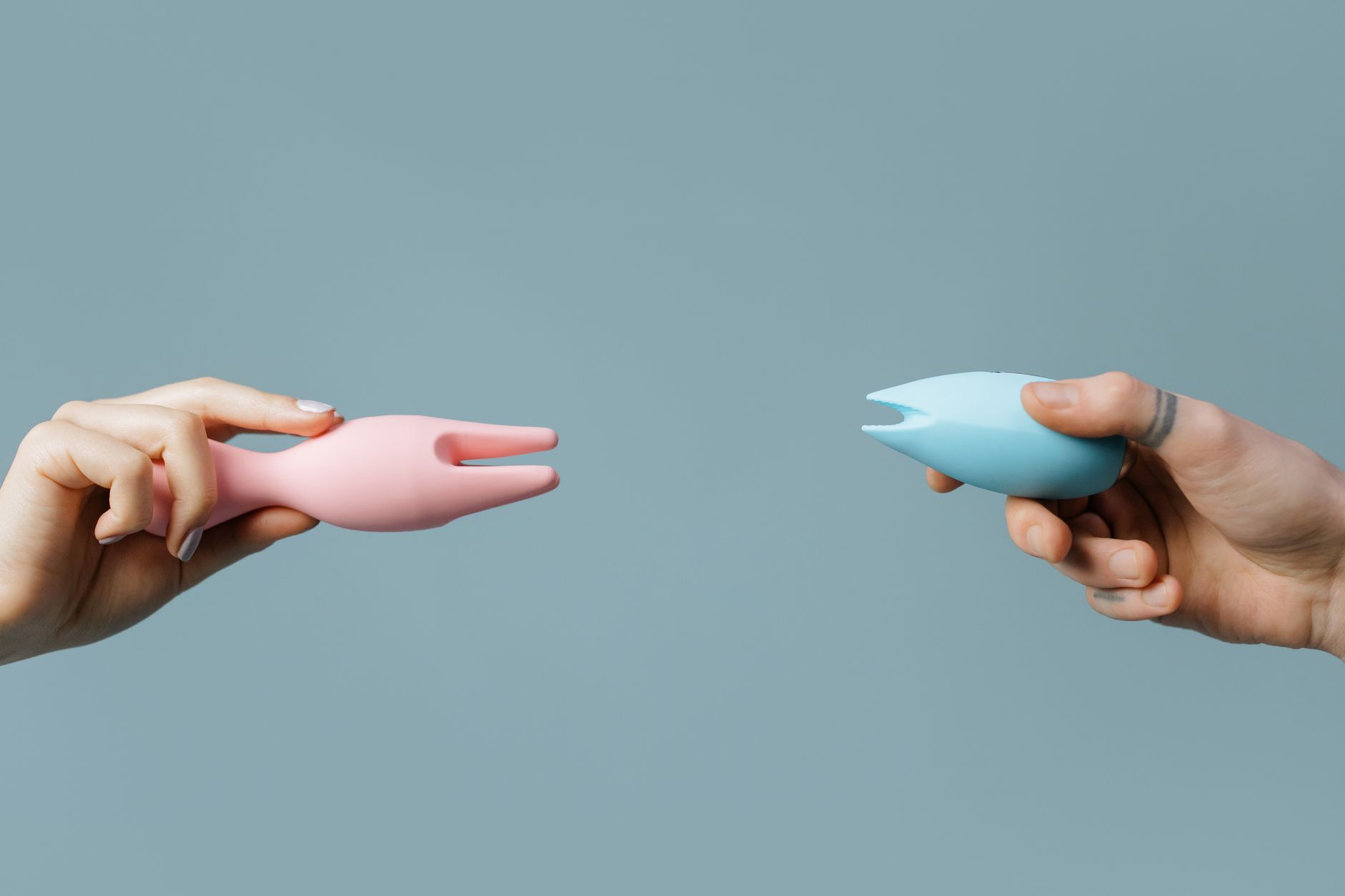
This is where a lemon vibrator changes the equation. Not because toys fix relationships. They don't. But because they do something relationships alone can't do right now: they let you rebuild your own nervous system's capacity for pleasure in a way that feels safe, on your timeline, without the weight of anyone else's expectations.
Why disconnection kills pleasure first
When emotional distance shows up, your parasympathetic nervous system (the part that needs to be calm for arousal) goes into lockdown. You're in sympathetic mode. Alert. Vigilant. Waiting for the next thing to go wrong. That's not a mindset that produces orgasms.
Second, there's the mental load. You're probably rehearsing conversations in your head, worrying about what the disconnection means, wondering if this is permanent, calculating how you got here. Your brain is full. Arousal needs real estate in your mind, and there's none left.
Third, and this one's simple, you've probably stopped touching yourself. When sex with a partner feels loaded, masturbation can feel equally loaded. So you just don't do it. For months. Your body doesn't hear from you. Sensation dulls. That dullness feels like proof that you're broken, when really you're just inactive.
A lemon vibrator interrupts that cycle by offering something specific: pleasure with zero expectation. No one else involved. No conversation needed after. Just your body, your pleasure, your timeline.
Starting when you don't know what you want anymore
One of the hardest parts of disconnection is that you probably don't remember what turned you on. That's not actually forgetfulness. It's neural atrophy. When a pathway doesn't get used for months, it gets quieter.
So start small and slow. A lemon vibrator has the advantage here because you can begin at the lowest pattern (usually pattern 1 or 2) and just explore. You're not looking for an orgasm. You're looking for anything that feels like a spark. Warmth. A flutter. Curiosity.
Try it in a moment when your partner isn't home. Lock the door. No phone, no screens, nothing else asking for your attention. Spend 15 minutes just getting reacquainted with the feeling of suction and vibration. Does pattern 3 feel better than pattern 1? Do you prefer it when you angle it slightly differently? Where does sensation build?
You're not training for a performance. You're writing the instruction manual for your own body again.
The difference between solo pleasure and partnered sex right now
Here's what I tell couples in this exact situation: reconnecting with solo pleasure is not an alternative to fixing your relationship. It's a prerequisite. Because right now, if you try to have sex with your partner, you're probably doing it from a place of obligation or resentment or hope that it will magically fix things. Sex built on that foundation is terrible sex. It makes the disconnection feel worse, not better.
But if you spend a few weeks rebuilding your capacity for pleasure on your own, something shifts. Your nervous system remembers what calm arousal feels like. Your body remembers that pleasure is possible. And then, eventually, when you do engage with your partner, you're not bringing desperation. You're bringing the knowledge that your body still works, that you're still capable, that pleasure is still part of your life.
That changes the energy entirely. Less pressure. More possibility.
How often, and when
I'd suggest 2-3 times a week. Not because there's a magic number, but because regularity matters for nervous system reset. Your body needs to know that this is a normal, safe thing that happens regularly. Not a big event. Not something you're desperate about. Just a regular part of your week.
Timing matters too. Pick a time when you're actually calm-ish. Not right after a tense conversation. Not when you're exhausted and have 10 minutes before your partner gets home. Pick a time when you have at least 20-30 minutes and your nervous system is somewhere in the middle. Not activated, not collapsed. Just available.
Warm up first. A bath, a few minutes of slow breathing, music you actually like. The more you can move your body into parasympathetic territory before you start, the faster and deeper pleasure will show up.
What a lemon clitoral vibrator does differently
If you've only ever used a wand or a traditional vibrator, a suction-based tool like the Lemon Vibrator works differently. Instead of constant vibration, which can feel intense or even painful when your tissues are desensitized from months of no activity, suction creates a gentler wave of stimulation. It pulls slightly, releases, pulls again. It mimics oral sex more closely than any other toy.
This matters when you're rebuilding. The sensation is less aggressive. You can start at a lower intensity and still feel something real. And because suction doesn't numb your clit the way some vibrators do, you can have longer sessions without that dead feeling.
Start at pattern 1. Sit with it for a few minutes. Your body will tell you if it wants more intensity. Listen to that. There's no rush to patterns 5 or 6. Slow rebuild is the whole point.
When to bring your partner into this (or when not to)
Eventually, maybe. Not right now.
Right now, this is your project. Solo. The moment you start thinking about your partner while you're doing this, you've reintroduced the pressure. You've turned it into foreplay or a warm-up for something else. That defeats the purpose.
When you've spent a few weeks reconnecting with your own pleasure, when you can access arousal and orgasm without anyone else in the room, then you might consider bringing that energy back into your relationship. But only if your relationship is also doing the other work. The conversations, the repairs, the reconnection attempts.
A toy won't fix disconnection. But it will keep you from losing yourself while you figure out whether the connection is fixable.
The shame piece that keeps people stuck
Honestly, the hardest part of this is often the guilt. If you're in a disconnected relationship, there's usually guilt attached to masturbating. Guilt that it means you don't love your partner, or that you should only be sexual with them, or that pleasure is something you owe to the relationship, not to yourself.
That guilt is exactly backwards. Your pleasure is not conditional on the state of your relationship. Your body is not a commodity in the marriage or partnership. Your capacity for sensation and orgasm is yours. Full stop.
Some of the most resilient people I work with are the ones who insisted on reconnecting with solo pleasure during hard relationship times. Not because they were checking out. But because they were saying: I matter. My body matters. I'm not disappearing.
That actually makes you a better partner, if the relationship is worth saving. You show up less desperate. Less bitter. More whole.
What happens next
If you're in a relationship that's worth repair, reconnecting with your own pleasure is the first move. Give yourself 4-6 weeks of solo practice. Let your nervous system find its way back to calm arousal. Notice what your body wants. Notice what's possible.
Then, if you want to, have a conversation with your partner about reconnection. A real one. Not during sex. Not with an agenda. Just: I miss us. I want to rebuild this. I'm working on my end. Are you?
If that conversation goes somewhere, sex might eventually come back. It might look different. It might need scaffolding like a lemon vibrator to help bridge the gap. It might be slower, more intentional. All of that is normal after disconnection. What matters is that you both show up willing.
But if that conversation doesn't go well, if your partner isn't interested in repair, at least you'll know something crucial: you can still feel pleasure. Your body still works. You're still alive. That knowledge is the ground beneath whatever comes next.
Common questions when reconnecting after relationship shifts
Is using a vibrator a sign that I should leave my relationship?
No. Reconnecting with solo pleasure while your relationship is struggling is actually one of the healthiest things you can do. It keeps you from losing yourself entirely. It gives you clarity about what you want. It prevents resentment from eating you alive. If anything, it buys time and space for real repair work.
What if my partner finds out I'm using a vibrator and gets angry?
That's a separate problem, and it's worth naming. A partner who is threatened by your solo pleasure during a disconnected time is showing you important information about control and ownership. This isn't about the toy. It's about their anxiety about your independence. That's something a couples therapist can help address, but it's also a yellow flag about the relationship itself.
How long until solo pleasure feels normal again?
Depends on how long you've been disconnected. For most people, 4-6 weeks of regular practice brings sensation back meaningfully. For others, especially after longer gaps, it takes 8-12 weeks. Your body isn't broken. It just needs consistent evidence that pleasure is safe and possible.
Can a lemon vibrator fix my relationship?
No toy fixes a relationship. But reconnecting with your own body can fix your clarity, your resilience, and your capacity to show up in the relationship from a place of wholeness instead of desperation. That's not nothing.
What if I use a lemon clitoral vibrator and still don't feel anything?
That's probably not a sensation problem. That's likely a nervous system problem. You might be too activated, too stressed, too much in your head. Try adding something before the vibrator: a bath, breathwork, music, movement. Let your parasympathetic system wake up first. The sensation will follow.
Should I tell my partner about this?
That's your call. Some couples benefit from transparency about solo pleasure as part of repair. Others don't. What matters is that you're not hiding it out of shame. If you do decide to share, frame it clearly: I'm reconnecting with my body so that I can be more present in our relationship. Not as an accusation. As self-care.
The bridge back starts with you
Relationship disconnection is real. It's painful. It makes you question everything, including your own capacity for pleasure. But pleasure isn't something your partner can give or take away from you. It's something you have access to, always. A lemon vibrator is just a tool for remembering that. The reconnection is yours to do. One slow, intentional session at a time. Your body is waiting. Give it a chance to wake up.
If you're navigating this alone and feeling stuck, reaching out for support is a sign of strength, not weakness. Whether that's a couples therapist, a sex therapist, or just someone you trust. You don't have to figure this out in isolation.