
Let's name what's actually happening
Your partner doesn't hate toys. They're worried about what toys mean. Usually it's one of four things: they think toys are a replacement for them, they feel like they've failed you somehow, they're embarrassed, or they don't trust that introducing something new won't destabilize the relationship.
None of those fears are stupid. But they're all solvable if you approach this like a conversation between teammates instead of a negotiation where one person wins.
The difference between opposition and hesitation
This matters more than you'd think. Opposition is "I don't want toys in this relationship ever." Hesitation is "I'm not sure about this and I'm nervous." If your partner is hesitant, they're actually somewhere in the "open to it" zone already. They're just not there yet.
Hesitation usually comes from not understanding what you want toys to do, imagining the worst-case scenario, or feeling like their role in your pleasure is being questioned. The fix is information and reassurance. The fix is not buying a toy first and surprising them with it.

Photo by cottonbro studio on Pexels
How to start the conversation (and not botch it)
Timing matters. Not in the middle of sex, not right after rejection, not when you're frustrated. Pick a moment when you're both relaxed and have time to talk without rushing.
Start with vulnerability, not demand. "I've been thinking about this and I'm nervous about bringing it up, but I want to explore suction toys and I want to do it with you" lands differently than "We need to talk about adding toys."
Then get specific about what you want, not what you're missing. "I'm curious about how a clitoral vibrator might feel and I want to try it together" is clearer than "My orgasms are hard to reach." The second one sounds like a complaint about them.
The fears that usually hide underneath
"You're replacing me." This is the big one. People internalize their partner's pleasure as their responsibility. If a toy gives you an orgasm they couldn't, they feel like they've been made redundant. The antidote is showing them how tools and bodies work together. A lemon vibrator doesn't replace their touch. It works alongside it. You're not choosing the toy over them. You're saying yes to more pleasure, and you want them there for it.
"I'm not enough." Sometimes hesitation is shame. Your partner might feel like being asked to introduce a toy is evidence they're not satisfying you. This requires direct reassurance. "This isn't about you failing. It's about me wanting to explore a new kind of sensation. And I want you involved because you matter to me."
"What if they find out I use one?" Social embarrassment is real. Some partners worry about judgment from friends, family, or anyone else who might find out. This is worth naming directly. "This is private. It's about us. No one else needs to know unless we decide to tell them."
"What if I don't like it?" Fair question. Sometimes the partner worries that introducing a toy will change the dynamic in a way they didn't sign up for. "We can start slow. We can stop whenever you want. This is an experiment, not a commitment."
Starting slow (actually slow, not slow in your head)
If your partner agrees to try, don't jump to full penetration with a lemon clitoral vibrator on your first night together. Slow means:
First conversation: You explain what lemon vibrators are, how suction toys work, why you're interested. No toy present. Just talking.
Second conversation: Show them the actual toy. Let them hold it, see how it feels in their hand, understand the size and material. This removes the mystique and the scary imagination part.
First session: Introduce the toy while you're together but not necessarily during partnered sex yet. Maybe you use it solo while they watch. Maybe they hold it while you guide their hand. The goal is just getting comfortable with it existing in the room.
Second session: Use it together during foreplay. Not as a replacement for their hands or mouth. As an addition. Their touch plus the toy. Both happening.
This timeline might feel slow to you. But it's fast enough for someone who was hesitant. You're building trust with each step.
What actually changes when toys enter the picture
Honestly, sometimes nothing dramatic. You might have stronger orgasms. You might relax more knowing you have options. You might discover that your partner actually enjoys watching you use the toy, or participating in it.
But here's what can go sideways: your partner watches you orgasm with the toy and feels competitive. Or they feel relief that now sex is "easier" for you and they check out mentally. Or they get turned on by it but feel guilty about that. These are all normal. And they all need to be talked about.
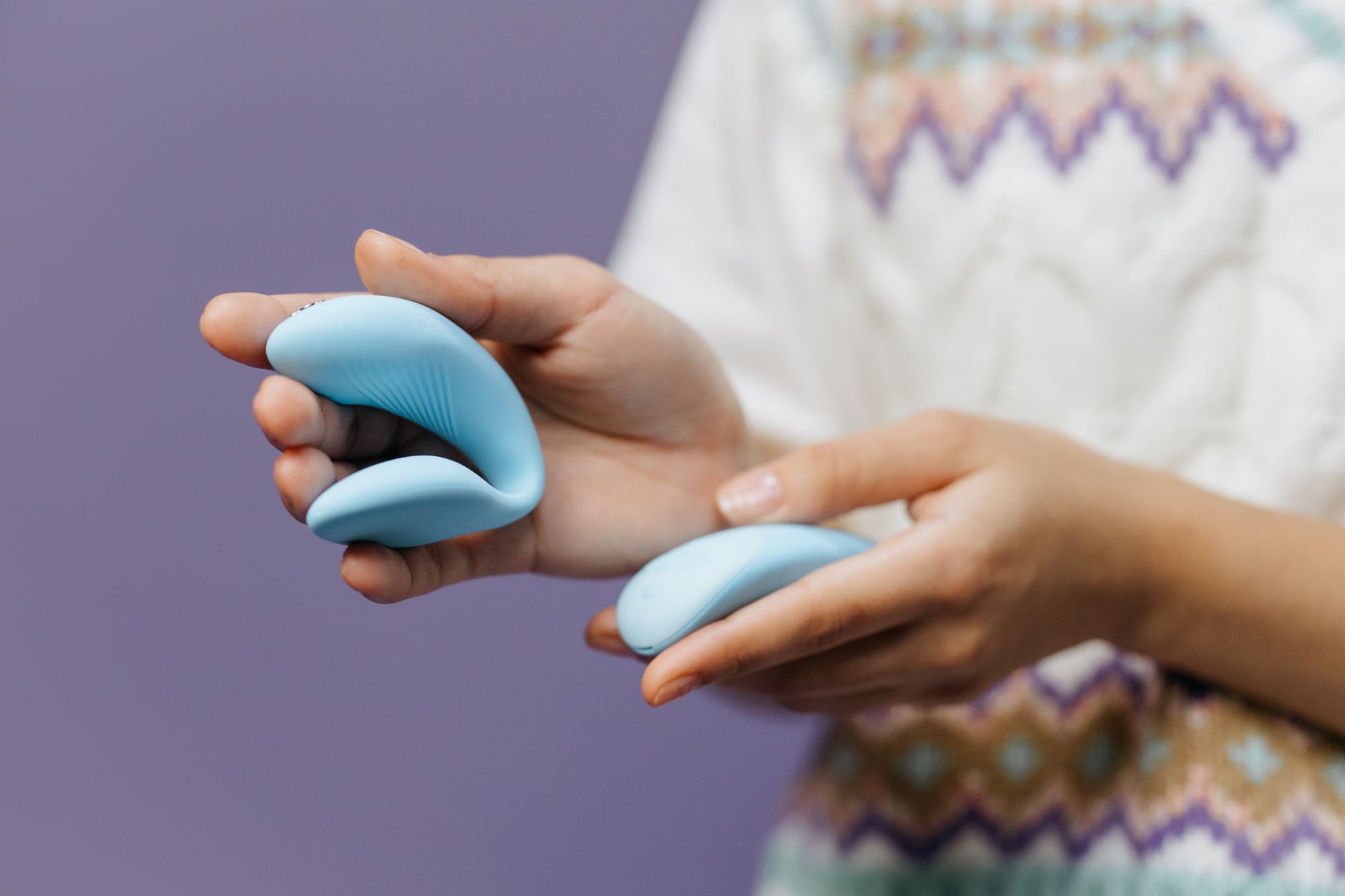
Photo by cottonbro studio on Pexels
The ongoing conversations (just as important as the first one)
After you've used a toy a few times together, check in. Not in a formal way. Just "How are you feeling about this?" or "Did you like that?" or "Anything you want to try differently?"
Your partner might say it's hot. They might say it makes them feel weird. They might say they need a break. All of those are data, not rejections. The goal isn't to convince them to love toys. The goal is to keep the door open for exploration while you're both being honest.
Sometimes partners warm up to toys over time. Sometimes they don't. The key is that you've created space for them to change their mind in either direction without resentment building up.
When to consider outside help
If your partner's hesitation is absolute and non-negotiable, that's information too. You get to decide what that means for you. But if their hesitation is rooted in shame, fear of judgment, or old beliefs about what couples should do, a couples therapist who specializes in sex and intimacy can help break that apart faster than you can alone.
A good therapist reframes toys not as a threat but as a tool for communication. Learning to ask for what you want, learning to listen without defensiveness. That's what toys are actually teaching you.
The thing people don't talk about enough
Introducing toys often surfaced stuff that was already there. Disconnection, unspoken resentment, avoidance. Toys don't cause those things. They just make them visible. If your partner's hesitation is about the toy, the conversation is easier. If it's about something else, you'll both probably feel it.
Trust that. If something feels off, it probably is. And that's worth exploring together before you buy anything.
Frequently asked questions
What if my partner says no and I really want to try clitoral vibrators?
Then you have a real choice to make. You can use toys solo, which is your right. You can revisit the conversation in a few months. Or you can accept that this is a limit for your partner and decide if that works for you. Resentment about denied pleasure builds slowly, so don't ignore it.
Should I buy the toy before talking to them?
No. That signals that you don't care about their comfort or consent. It also puts them on the defensive. The conversation comes first. The toy comes after agreement.
My partner wants to use a toy on me but I'm nervous.
That's a different conversation. You get to say "I want to try this but I need us to go slow" or "I'm not ready yet." Your comfort is just as important. This goes both ways.
What if my partner is interested but I'm the hesitant one?
You're allowed to have boundaries. You're also allowed to sit with curiosity instead of saying no immediately. There's middle ground between "never" and "sure, right now." Explore it at your pace.
How do I know if a lemon vibrator is the right toy to start with?
Clitoral vibrators like the lemon suction toys are popular for couples because they're intuitive and they don't require penetration. If you're not sure, looking at your own pleasure first (solo exploration) helps you know what you actually want before you bring your partner in.
What if we try it and it kills the mood?
Sometimes introducing something new is awkward. That's normal. Awkwardness doesn't mean it's wrong. It usually means you need to laugh about it, take a break, and try again another time. The mood will survive.
What comes next
Once hesitation becomes curiosity, once your partner has seen that toys don't threaten the relationship but actually deepen it, things often shift. You get more comfortable asking for what you want. They get more comfortable saying yes without fear. That's not about the toy. That's about the conversation.
The toy is just the beginning.
How to Use a Lemon Vibrator When You Feel Self-Conscious About Pleasure With a Partner can help you explore what's underneath the discomfort if either of you carries shame into this space.
If this is part of rebuilding intimacy after a rough patch, How to Use a Lemon Vibrator When Restarting Intimacy After a Long Gap walks through that specific terrain.
And if you want to understand your own pleasure better before bringing your partner in, How to Use a Lemon Vibrator When You Want Deeper Connection With Yourself is a good place to start.
The conversation you're about to have is vulnerable. That's exactly why it matters. You're asking your partner to grow alongside you, to try something new, to stay curious even when it's uncomfortable. That's what long-term intimacy looks like.