Let's name the thing nobody talks about
Your partner saw something online. Or read about it. Or imagined it. Then you introduced a Lemon Vibrator into your intimate life, and it... didn't match the fantasy. Maybe it feels less intense than they expected. Maybe the sensation is different than they pictured. Maybe you orgasm in thirty seconds instead of the slow-building experience they envisioned. Maybe you get quieter, or louder, and that surprises them.
This gap between expectation and reality is one of the most common friction points in couples using clitoral vibrators together. And it's fixable. But it requires saying things out loud that most couples skip.
Why expectations get so specific (and so wrong)
Pornography and erotica give partners a visual template. Social media gives them a narrative. Neither bears much resemblance to how actual bodies respond to stimulation. A partner might assume that introducing a Lemon clitoral vibrator means simultaneous orgasms, or that you'll become multiorgasmic overnight, or that you'll want to use it every single time you're intimate.
Meanwhile, you're experiencing something else entirely. The sensation might be gentler than they imagined. You might need it to work alongside something else, not instead of it. You might actually want longer to warm up than before. You might feel self-conscious, or distracted, or find that the reality of someone watching doesn't match the reality of being alone.
The mismatch isn't a failure. It's just information. And information is how you build something real.
The conversation that changes everything
Here's what doesn't work: waiting until you're in the moment to mention that this isn't what you want, or nodding along and faking pleasure so your partner feels right. Both leave you disconnected and them confused.
Here's what does work: a conversation outside of sex. Boring, I know. But necessary.
Start like this: "I want to talk about [the Lemon vibrator / us trying this together / how this is actually feeling], and I want you to hear something that's not about you being wrong. It's just about what my body actually does."
Then be specific. Not "this doesn't feel good" but "I need longer to build up arousal, so maybe we warm up differently first" or "the sensation is more surface-level than I expected, and I actually prefer that" or "I get overstimulated faster than I thought, so I want to use it for shorter sessions."
Your partner brought fantasy. You're offering reality. Both have value.
What realistic pleasure actually looks like
When you use a Lemon vibrator with a partner, a few things shift compared to being alone. One, there's psychological activation. Knowing you're being watched, even if you're also being touched, changes the experience. Some people find it intensifies sensation. Others find it creates distance or pressure.
Two, the pace changes. Alone, you can take as long as you need. With a partner, there's an unspoken rhythm. You might feel rushed even if they're not rushing you. Or you might find you come faster because the anticipation shortens the climb.
Three, the orgasm itself might feel different. With a partner present, some people report shallower, quicker releases. Others report deeper, more full-body waves. Neither is wrong. Both are real.
Your partner needs to know this isn't about the Lemon vibrator being insufficient. It's about how your body responds to stimulation when someone else is in the room.
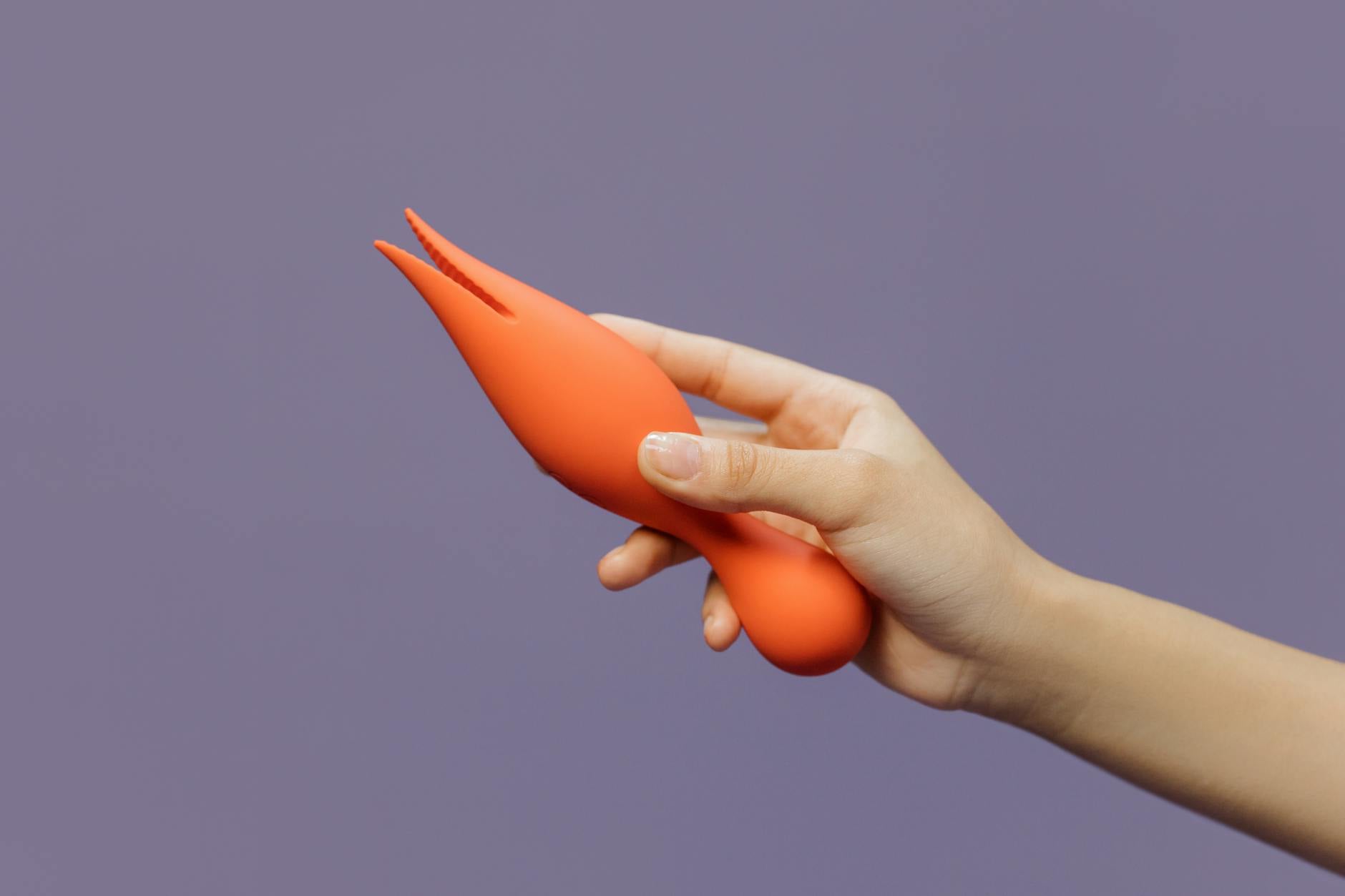
 Photo by Madison Inouye on Pexels
Setting expectations before you start
Before the next time you use it together, be clear about what you're trying to explore. Are you testing whether you enjoy partnered stimulation? Are you curious about whether a Lemon vibrator changes the dynamic for both of you? Are you trying to extend foreplay? Are you looking for a faster path to orgasm because you're short on time?
Each goal creates a different experience. A five-minute session with a specific goal feels nothing like a thirty-minute exploration where both of you are just seeing what happens.
Tell your partner: "This time, I want to focus on [x]." It gives them permission to stop performing the fantasy and start noticing what's actually happening.
When your pleasure is different from what they imagined
Some partners carry an assumption that introducing a toy means introducing intensity, speed, or novelty. If your body actually wants gentleness, or stillness, or [the same slow rhythm as before with the added sensation of the Lemon vibrator], that's not a disappointment. It's your preference.
You don't owe your partner a specific type of pleasure in exchange for them agreeing to use a toy. You owe them honesty about what works. And they owe you the grace to adjust their fantasy to match your reality.
If they push back, that's worth a conversation outside the bedroom too. "When I tell you what feels good, I need you to believe me even if it's not what you pictured." That's fair. That's healthy.
The feedback loop that actually works
After you use the Lemon vibrator together, talk about it. Not in a clinical way. Just: "That felt [x]." "I liked it when you [y]." "Next time, I'd want to [z]."
Keep it light. Keep it specific. If something didn't work, name it without shame. "The intensity was higher than I wanted" isn't a criticism of the toy or your partner. It's data.
Your partner brought expectations. You're offering feedback. Over time, feedback rewrites expectations. And when expectations match reality, the sex actually gets better, because you're both responding to what's actually happening instead of what you thought would happen.
What to do if the gap feels too wide
Sometimes a partner's fantasy is so different from your reality that it creates real distance. They imagined you'd come instantly. You need twenty minutes. They wanted to watch you lose control. You need to feel safe and unhurried. They wanted novelty and intensity. You want slowness and tenderness.
That gap is worth taking seriously. Not because anyone is wrong, but because sustained misalignment erodes intimacy.
If this is happening, how to use a Lemon vibrator when you want to reconnect after relationship stress is a useful read. But also consider whether you need a deeper conversation about what you each actually want, separate from what you thought the toy would fix.
Sometimes a Lemon clitoral vibrator is a tool for connection. Sometimes it's a mirror that shows where the connection needs work.
Making the reality better than the fantasy
The good news: when you stop chasing the fantasy and start building on the reality, partnered pleasure gets actually good. Not the highlight-reel version. The sustainable, repeatable, genuinely intimate version.
Your partner's expectations will adjust because you'll keep showing them what works. You'll feel less pressure because you're not performing the imagined version anymore. And the Lemon vibrator becomes what it actually is. Not a magic fix. Just a tool that helps you feel something interesting together.
People also ask
Why does my partner seem disappointed when I use a vibrator with them?
Sometimes disappointment comes from a mismatch between fantasy and reality. Sometimes it comes from feeling sidelined or replaced by the toy. The first conversation to have is "What were you imagining?" Followed by "Here's what's actually happening with my body." Often, the disappointment fades once expectations adjust to match reality.
How do I tell my partner their expectations are unrealistic?
Direct and kind: "I want to try this, and I also want to manage expectations. My body responds [x way], and I want you to know that's what it'll probably look like." Then you follow through by showing them exactly that. Your consistency rewrites their mental picture.
Should I use a Lemon vibrator differently when my partner is watching?
Yes, often. Your body might need a longer warm-up, or less intensity, or more of your own touch alongside the vibrator. Tell your partner: "When you're here, I need [x] to feel good." That's not a critique. It's how your nervous system works with another person present.
What if my partner wants me to orgasm faster with a vibrator?
That's his expectation, not your reality. You can say: "My body takes time to build arousal, and rushing it makes it less pleasurable." If he can't accept that, you have a compatibility issue that's bigger than the toy.
Can a Lemon vibrator fix a relationship where we want different things sexually?
No. A toy can create curiosity or novelty, but it can't rewrite fundamental mismatches. If your desires are fundamentally different [like you wanting slow connection and he wanting intensity], that needs to be addressed as a relationship issue, not a tool issue.
How often should we use a clitoral vibrator together if my partner is really into it?
That's up to you and your body. Not his fantasy. If he wants to use it every time and you want once a month, you get to say that. The rhythm is negotiable. Your comfort isn't.
The real work
Introducing a Lemon vibrator into partnered sex is less about the tool and more about communication. The gap between what your partner imagined and what actually happens is information. Use it. Adjust. Repeat. Over time, what starts as a mismatch becomes a shared understanding of how your bodies work together.
That's the opposite of fantasy. That's intimacy. And honestly, it's better.
If you're navigating communication gaps around pleasure, how to use a Lemon vibrator when you want to slow down and build anticipation walks through creating a shared rhythm that works for both of you. You might also find value in how to use a Lemon vibrator with a partner after solo play, which addresses the transition from solo exploration to partnered experience.
Your pleasure matters. Your partner's willingness to adjust expectations matters too. When both show up, the Lemon vibrator becomes what it should be. A shared experience, not a performance.