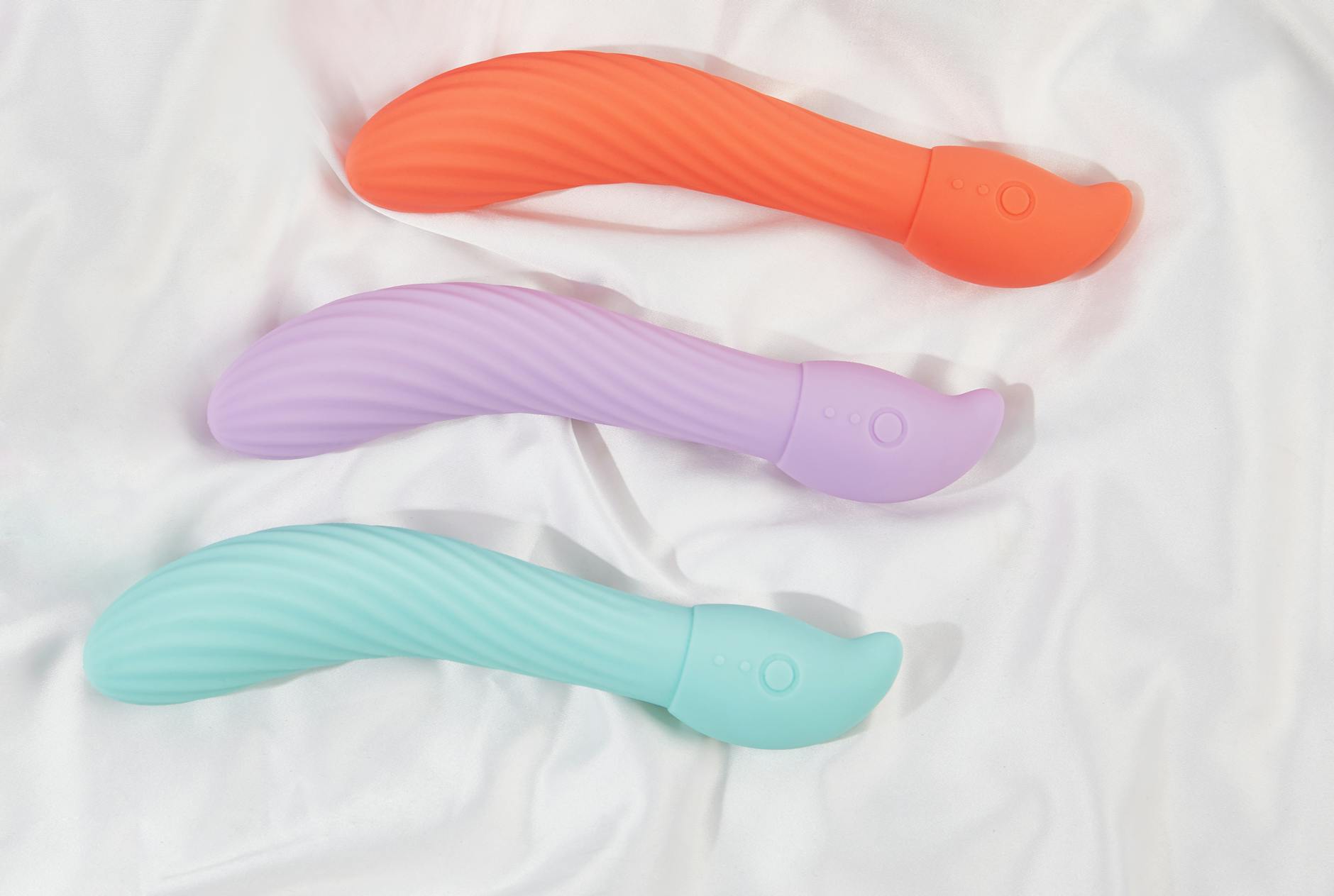
How to Use a Lemon Vibrator When Taking Antidepressants or Anxiety Medication
Let's talk about the side effect nobody wants to admit
You started antidepressants or anti-anxiety medication and suddenly pleasure feels like it's happening through a thick pane of glass. Your partner touches you and you feel nothing. Or everything feels numb. Or you can't orgasm no matter what you do. You're not broken. This is one of the most common, most underdiscussed side effects of psychiatric medication, and it affects roughly 40-60% of people taking SSRIs, SNRIs, and certain anti-anxiety drugs.
Here's what I tell my clients: your medication is working. Your brain chemistry stabilized because the drug is doing exactly what it's supposed to do. But that same chemical shift can dull sensation, flatten desire, and make orgasm feel distant or impossible. The goal isn't to choose between mental health and pleasure. It's to understand what's happening and use tools that work with your body's new reality.
A lemon vibrator, specifically one that uses suction stimulation like the Lem, can be a game-changer here. Not because it's magic, but because it works differently than traditional vibration, and that difference often bypasses the numbness that medication creates.
How psychiatric medication affects sexual sensation
SSRIs, SNRIs, and many anti-anxiety medications work by increasing serotonin availability in your brain. That's what lifts your mood. But serotonin also regulates arousal, lubrication, and orgasm. When medication raises serotonin, it can inadvertently:
- Slow down arousal signals. Your brain takes longer to register stimulation, so what used to feel electric now feels distant.
- Reduce genital blood flow. Less blood to the clitoris means less swelling, less sensitivity, and a harder time building toward orgasm.
- Flatten emotional connection to pleasure. You might feel physically fine but emotionally disconnected from sex or masturbation.
- Make orgasm feel weaker or take longer. Some people describe it as reaching a plateau and never quite tipping over the edge.
The tricky part: these aren't signs that you should stop medication. They're signs that your nervous system needs a different approach to pleasure.
Why lemon vibrators are different
Most vibrators send waves of vibration across tissue. It's fast, it's intense, and it works brilliantly for people with normal sensation. But when medication has numbed your clitoris, intense vibration often feels like buzzing against a cushion. You're aware it's there, but you're not really feeling it.
Lemon clitoral vibrators work through pulsing suction instead of pure vibration. The technology creates a gentle seal around the clitoris and rhythmically draws tissue into the mouth of the device. This stimulates nerves in a completely different way.
Why does that matter when you're on meds? Suction works on deeper nerve clusters that vibration sometimes misses. It's less dependent on surface sensitivity and more focused on the internal architecture of your clitoris. For many people on antidepressants, that translates to sensation they can actually feel.
The practical adjustment process
If you're on antidepressants or anti-anxiety medication and want to use a lemon vibrator, here's what I recommend:
Start lower than you think you need. Your instinct might be to crank the intensity to compensate for numbness. Resist that. Begin on the lowest setting. Let your nervous system wake up gradually. Numbness from medication isn't fixed by force. It's fixed by patience and the right stimulus.
Give yourself 20-30 minutes. When arousal signals are slowed by medication, you need more time for your body to build. Don't set a goal of orgasm. Set a goal of sensation. Feel what you're feeling. Notice where stimulation registers. This isn't wasted time. It's retraining your nervous system.
Combine it with mental focus. Medication can create emotional distance even when physical sensation is present. When you're using a lemon vibrator, really focus on what you're feeling. Not in a meditative way. In a practical way. Where do you feel it? Does it change if you shift position? This attention bridges the gap between physical sensation and emotional experience.
Lubrication helps, always. Antidepressants often reduce natural lubrication. Water-based lube makes suction sensation more consistent and comfortable. It's not because anything is wrong. It's just how medication changes your body.
Expect timing to shift. You might orgasm faster than before. Or much slower. Or differently altogether. That's normal. Your body's pleasure response has been recalibrated. It'll find its rhythm, but it might not be the rhythm you remember.
When to talk to your prescriber
Here's the important part: sexual side effects from psychiatric medication are medical, not personal failures. If numbness is severe, if you can't orgasm at all, or if it's affecting your relationship, tell your doctor. Don't wait. Don't assume you have to choose between mental health and pleasure.
Your prescriber has options. They might:
- Adjust your dose (sometimes lower is more sustainable long-term anyway).
- Switch you to a different medication in the same class that has fewer sexual side effects.
- Add a medication like bupropion that can counteract SSRI numbness.
- Suggest a timed break if you're in a stable place mentally.
None of this means medication isn't working. It means your doctor can help you find the right balance between mental health and bodily pleasure. That conversation matters.
The emotional layer (it's real)
Beyond the pharmacology, medication often comes with emotional weight. You might feel shame that you need antidepressants. You might feel disconnected from your body because of what you've been through. You might feel like sexuality got stolen from you.
Using a lemon vibrator in this context isn't just about getting an orgasm. It's about reclaiming sensation on your own terms. It's about learning your body in its current state, not mourning what it used to be. That mindset shift matters more than the vibration itself.
If you're in a relationship, this is also worth naming. Your partner might misinterpret numbness as lack of desire for them. It's not. It's medication. You can want someone deeply and still feel nothing physically. Those exist in parallel. The conversation "My medication is affecting sensation" is different from "I don't want you anymore."
The patience part
Most people on antidepressants adapt over 4-8 weeks. Your body acclimates. Some numbness lifts. Some people find they need a stronger tool, like a lemon clitoral vibrator, and that becomes their new baseline. Neither outcome is failure. Both are adaptation.
If you're considering or on medication for depression or anxiety, your pleasure matters alongside your mental health. They're not competing. You deserve both. A lemon vibrator, used with intention and patience, is one tool that helps bridge the gap when chemistry shifts sensation. It's not magic. But it's designed for exactly this problem.
People also ask
Do antidepressants permanently damage sexual function?
No. Sexual side effects from medication are almost always temporary. When you stop the drug (in consultation with your prescriber), sensation typically returns within weeks. If you stay on medication long-term, your body usually adapts. Some people find they need a different type of stimulation, like suction from a lemon vibrator, but that's adaptation, not damage.
Can I use a lemon vibrator while on SSRIs?
Completely yes. A lemon clitoral vibrator is actually a smart choice because suction-based stimulation often feels more intense than traditional vibration when numbness is present. Start on the lowest setting and build from there. There are no drug interactions between psychiatric medication and silicone vibrators.
Will switching medications help if I use a lemon vibrator instead?
They're separate conversations. If numbness is severe, talk to your doctor about medication adjustments. Meanwhile, a lemon vibrator can help you restore sensation with what you're currently taking. You don't have to wait for a medication change to start exploring tools that work for you. Do both if you need to.
How long does it take to feel sensation again with a lemon vibrator?
That varies. Some people feel immediate improvement because suction stimulates different nerves than what they've been missing. Some need 3-4 sessions before their nervous system wakes up. Be patient. The goal is progress, not speed. Many people report that after 2-3 weeks of regular use, sensation becomes more consistent.
Is it normal to need a stronger vibrator when on antidepressants?
Completely normal. Numbness makes it harder to feel subtle sensation, so yes, you might need a more direct tool. A lemon vibrator addresses this specifically because suction creates a different kind of sensation than traditional vibration. It's not that you're broken. It's that your nervous system needs a different approach.
What if nothing works, even with a lemon vibrator?
Circle back to your prescriber. If sensation doesn't improve after 6-8 weeks, if medication side effects are substantially affecting your quality of life, or if you feel emotionally disconnected from pleasure across the board, that's a sign to explore medication adjustments or dosage changes. Your doctor has tools. Use them. Pleasure and mental health both matter.
The honest conclusion
Antidepressants and anti-anxiety medication save lives. Full stop. But they change your body, including your sexual sensation. That's not a cost you have to accept silently. Tools like lemon vibrators, designed for deep clitoral stimulation through suction, work differently than traditional vibration and often feel more intense when medication has dulled sensation.
More importantly, there's no shame in this. Your medication is working. Your body is adapting. You're not broken. You're just exploring what pleasure looks like now.
If you want to dig deeper into how your body responds to stimulation, or if you're navigating these changes within a relationship, connection starts with honesty. Learn how to talk to your partner about medication side effects, or reach out to a therapist who specializes in sexual health. You deserve support on both fronts.