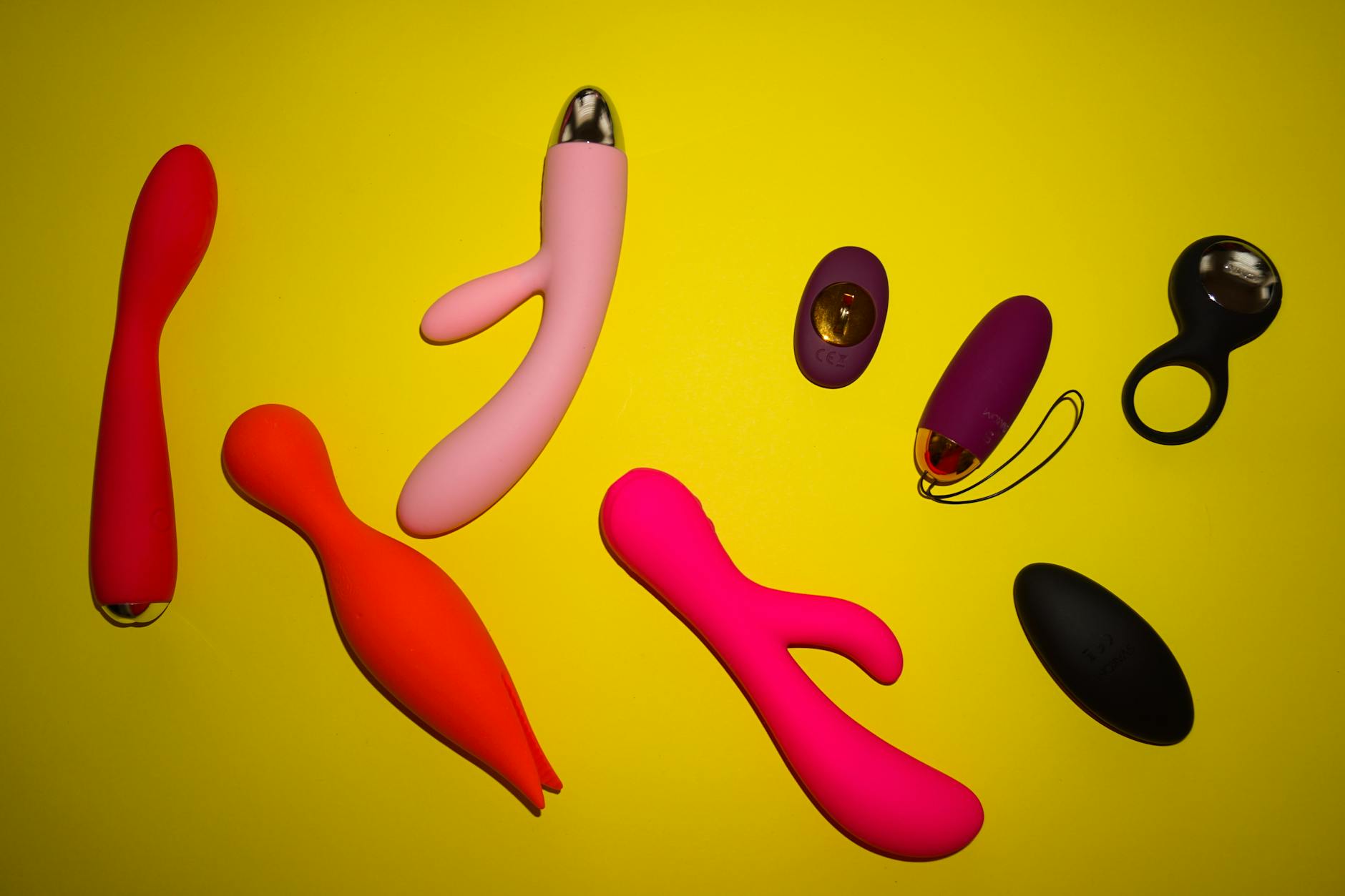
Let's talk about what stress actually does to your body
Stress doesn't just kill the mood. It literally hijacks your nervous system and tells your body that pleasure is unsafe. Here's what happens physiologically: when you're chronically stressed or anxious, your sympathetic nervous system stays activated. That's the fight-or-flight response. And fight-or-flight is fundamentally incompatible with the parasympathetic activation that pleasure requires.
When you're in a stressed state, blood flow redirects away from your genitals and toward your muscles. Cortisol and adrenaline flood your system. Your pelvic floor tightens. The vagus nerve, which is central to arousal and orgasm, stays in a defensive posture. Your brain literally cannot process pleasure signals the way it normally would.
The frustrating part: this isn't your fault. And it's not something willpower can fix.
Why a lemon vibrator works differently than willpower alone
A lemon clitoral vibrator like the Lem operates via suction and pulse, not vibration. This matters profoundly when you're dealing with stress-induced low libido. Here's why.
Traditional vibrators create stimulus through repetitive friction. When your nervous system is dysregulated, friction can feel irritating rather than pleasurable. Your body interprets it as another demand, another thing asking for your attention. The sensation can actually reinforce the stress state rather than interrupt it.
Suction works differently. It creates a gentle, rhythmic pressure that mimics natural arousal patterns. The sensation is less like stimulation and more like invitation. Your nervous system can read it as safe. The pulse pattern activates the parasympathetic nervous system gradually, without shock or intensity. This is why users often report that a lemon vibrator feels calming even as it's building pleasure.
The Lem's design also means you don't need to coordinate anything. You're not managing rhythm, pressure, or positioning. That removes cognitive load. When anxiety is high, the fewer decisions your brain has to make during intimacy, the better.
The reset sequence: how to approach this with your nervous system in mind
Using a lemon sexual toy when stress is high requires a different approach than using one when you're already aroused. You're not trying to get off quickly. You're trying to tell your nervous system that pleasure is possible again.
Start by creating genuine safety first. Not candles and music, necessarily. Safety means: no time pressure, no performance expectation, no one else around, your phone silenced. If you're with a partner, tell them explicitly that this is about you reconnecting with your own body, not about partnered sex. That boundary removes invisible pressure.
Spend 15 to 20 minutes just doing nothing. Breathing, lying down, letting your mind wander. You're not "warming up." You're downregulating your nervous system first. Some people find that a warm shower or a few minutes outside helps. Anything that signals safety to your body.
Then start with the Lem at its lowest setting. The goal is not sensation. The goal is attention. Notice what the suction feels like. Notice whether you can stay present for 30 seconds without your mind jumping to work, to something you forgot to do, to whether this is "working." That's the real practice.
Micro-sessions beat marathon sessions when anxiety is high
One of the biggest mistakes people make: they think they need a long, dedicated session to make progress. With stress-induced low libido, the opposite is true.
Short, frequent sessions (10 to 15 minutes, every other day or so) train your nervous system more effectively than one long weekly session. Here's why: your brain learns that pleasure is accessible and safe. Repetition teaches safety better than intensity does. You're also not creating performance pressure by setting aside a big chunk of time.
Use it as a ritual that signals to your nervous system: we're in a safe window now. Same time, same place if possible. Your body loves predictability when it's anxious.
Many people find that the physical sensation of using a lemon clitoral vibrator interrupts anxiety spirals just by providing something genuinely present to focus on. The pulse, the sensation, the rhythm. Your mind can't worry about six different things while it's tracking that.
Managing the guilt and the pressure that comes with low libido
Here's the thing about stress-induced libido loss: it often comes wrapped in shame. You feel broken. Your partner feels rejected. You feel pressure to "fix it" quickly, which paradoxically makes the nervous system stay dysregulated longer.
Using a lemon vibrator isn't about fixing anything. It's about gathering evidence that your body is still capable of pleasure. Each time you experience even a small spark of sensation that feels good, you're contradicting the story your anxious brain has been telling you: "Nothing feels good anymore."
That contradiction matters. It's how nervous systems update.
If you're in a relationship, the most helpful thing you can do is separate two conversations: "I'm stressed and my libido is affected" and "I love you and I want us to be close." Confusing those two things turns both into dead ends. You can use a lemon sexual toy to reclaim your own pleasure without that being about your relationship.
When to add a partner into the picture
Once you've spent a few sessions reconnecting solo with sensation, you might want to share this with a partner. But timing matters. Introduce it when you feel even slightly more present in your body, not when you're still in acute anxiety.
You can frame it simply: "I've been using this to help my nervous system reset. I'd like to show you what that feels like." You're inviting observation and presence, not performance. Many partners find that watching is genuinely arousing because it removes the pressure of "making it happen."
Don't use the lemon vibrator as a way to obligate yourself to sex with a partner. That defeats the whole point. Use it as a way to rebuild your own signal to yourself that pleasure exists. What happens after that is secondary.
The role of antidepressants, anti-anxiety meds, and how they interact with pleasure
If you're taking SSRIs or other anxiety medications, your low libido might be compounded by medication effects, not just stress alone. That's a conversation worth having with your doctor. But in the meantime, a lemon clitoral vibrator often works particularly well for people on medication because it doesn't require the same level of spontaneous arousal that traditionally-stimulated sex does.
The suction sensation is often enough to bypass the dampening effect medications can have on arousal. You're creating the conditions for pleasure externally, rather than waiting for desire to arrive on its own.
Talk to your provider about whether adjusting timing of medication, switching medications, or adding something like low-dose bupropion (which often restores libido in a way SSRIs don't) makes sense for your situation. But don't wait for that conversation to reconnect with your own body.
Expect a nonlinear path
Your libido won't come back in a straight line. Some days you'll feel present and interested. Other days stress will spike and you'll feel numb again. That's completely normal. You're not failing. Your nervous system is adjusting.
The practice is showing up anyway. Not pushing, not forcing, but being present with sensation when you can be. Over weeks, your nervous system starts to remember that pleasure is possible. That safety can return. That your body is still yours.
A lemon vibrator is a tool for that recalibration. It's not magic. But it's one of the most effective ways I've seen people interrupt the stress-anxiety-numbness loop and rebuild pleasure when their nervous system has been hijacked by chronic stress.
People also ask
Can a lemon vibrator actually help with anxiety symptoms?
A lemon clitoral vibrator doesn't treat anxiety directly, but it can interrupt the nervous system dysregulation that anxiety creates. The suction and pulse pattern activates the parasympathetic nervous system, which is the opposite of the fight-or-flight state anxiety produces. Many people report feeling calmer after using one, not just in the moment but for hours afterward. That calm state is what allows libido to return naturally.
How long does it take to feel my libido coming back after using a lemon vibrator?
Most people start noticing shifts within 2 to 3 weeks of consistent, short sessions. But "libido coming back" doesn't mean instant high desire. It means you can feel small moments of pleasure again. Small moments of being present in your body. From there, desire often follows naturally as your nervous system realizes it's safe.
Is it better to use a lemon sexual toy alone or with a partner when I have stress-related low libido?
Alone, initially. You need to rebuild your own signal to yourself that pleasure is possible. Adding a partner's presence or performance expectations too early can reintroduce the pressure that killed libido in the first place. Once you've had several solo sessions and you're feeling even slightly more present, sharing with a partner can be great. But lead with solo practice.
What if using a lemon vibrator doesn't help my libido?
That's worth paying attention to. Low libido from stress usually responds to this approach, but not always. If you're not noticing any shift after 4 to 6 weeks of consistent practice, consider talking to a therapist who specializes in anxiety or a doctor who understands both sexual health and stress. Sometimes what looks like stress-related libido loss is something else requiring different support.
Can I use a lemon clitoral vibrator if I'm also in therapy or taking medication for anxiety?
Absolutely. In fact, using a lemon vibrator alongside therapy or medication often accelerates progress. You're addressing the nervous system dysregulation from multiple angles: therapeutically, possibly pharmacologically, and somatically through pleasure and sensation. They work together well.
Should I tell my partner I'm using a lemon vibrator to address my low libido?
That depends on your relationship and what you're comfortable with. If you're in a partnership where you share intimate details, yes. If not, you don't need permission to reconnect with your own body. If your partner asks or if you want to invite them in eventually, the frame is simple: "I'm working on resetting my nervous system around pleasure. This helps." That's enough context for most partners to understand and support.
Start where you are
Stress-induced low libido is real, it's common, and it's temporary. Your nervous system learned to go into protection mode. It can learn to come back out again. A lemon vibrator, used thoughtfully and without pressure, is one of the most effective tools I've seen for making that transition happen. Your pleasure matters. Your body remembers how to feel it.
If you're ready to explore this further, we're here to help. Get in touch if you have questions about finding the right approach for your situation.