Let's talk about what no one warns you about
You started hormonal birth control for one reason. Maybe it was to prevent pregnancy, manage cramps, clear skin, or regulate periods. What nobody mentioned: it was about to change how your body experiences pleasure.
This isn't a reason to stop taking it. It's just information you deserved upfront. Birth control is a medical decision that often has side effects on sensation, lubrication, arousal speed, and orgasm intensity. And once you understand what's actually happening in your body, you can work with it instead of against it.
How hormonal birth control shifts your sensation baseline
The pill (and most hormonal contraceptives) suppress your natural cycle by keeping estrogen and progesterone levels relatively flat. Your brain stops sending the arousal-building signals it used to send during the follicular phase of your natural cycle. This means:
- Lubrication often becomes lighter or slower to arrive
- Clitoral sensitivity can flatten or shift (some people feel duller, others feel almost numb in certain spots)
- Time to arousal stretches longer
- Orgasms can feel less intense or require different patterns of stimulation
It's not imaginary. Studies show that hormonal contraceptive users report lower desire and slower arousal on average. But here's the part that matters: it's not permanent, and it's completely workable with the right approach.
Some people switch birth control methods and everything snaps back. Others adapt their technique and find their sensation baseline is actually different but equally pleasurable. The trick is not panicking and assuming your body is broken.
Why clitoral vibrators work differently when you're on hormones
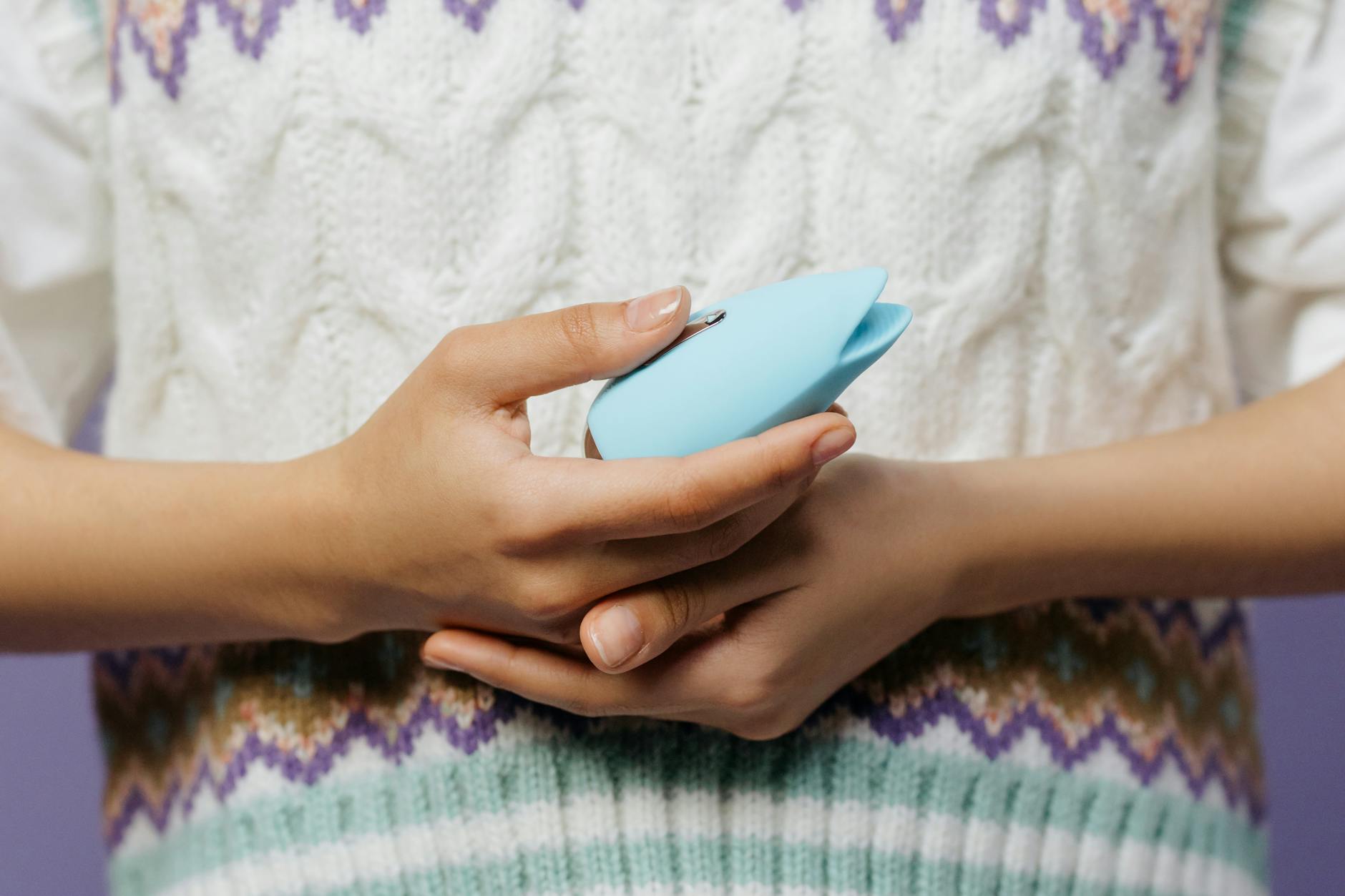
A clitoral vibrator like the Lem operates through suction and gentle pulsing rather than direct friction. This is particularly useful when birth control has flattened your sensation, because:
It bypasses the friction problem. If direct touch feels dull or requires intense pressure to register, suction stimulation works through a completely different neurological pathway. It's not about pressure. It's about creating a rhythm that pulls and releases sensation.
It works with slower arousal. Suction devices don't require your body to be "primed" the way friction does. You can start lower on the intensity scale and gradually work up as blood flow arrives, rather than jumping straight to maximum because you're impatient for sensation to kick in.
It gives you precision timing. The Lem has multiple intensity settings. When birth control has dampened sensation, you can start at pattern 1 or 2 and actually feel each level of increase. With traditional vibrators, you often jump from "barely feel it" to "too much." Precision helps you dial into what's actually working.
The first month adjustment period
If you recently started birth control and your pleasure has shifted, here's what to expect and how to navigate it:
Weeks 1-2 of any new contraceptive often feel chaotic because your body hasn't adjusted to the new hormone dose yet. Don't evaluate your sensation baseline yet. Wait until week 3-4, when the hormones have stabilized. That's your actual new normal.
When you do start exploring with a lemon clitoral vibrator, give yourself time. The first session back after noticing a change should be low-pressure. Set 20-30 minutes aside when you're not tired, not rushed, and genuinely curious rather than trying to "prove" you still work the same way. You do work. It's just different mechanics.
Start at the lowest setting and notice where sensation registers. Many people are shocked to find they actually prefer lower intensities once they stop bracing for numbness. Your brain might have been tensing anticipating dullness. Relax that.
When you need more lube, and why that's normal
Hormonal birth control often reduces cervical mucus production, which means less natural lubrication. This doesn't mean your body is failing. It means you have a tool: external lubricant.
I recommend water-based lubrication when using a lemon clitoral vibrator because it won't damage the silicone and it rehydrates as you go. Apply it before you start, and reapply every 5-10 minutes if sensation seems to fade. The lube isn't a sign of brokenness. It's a signal that you're working with your body's current chemistry, not against it.
Honestly, many people find that adding lube is actually the reset button they needed. It changes the entire sensation profile in a good way, even if birth control wasn't the culprit.
Why your arousal timeline changed
Before birth control, your arousal curve probably looked like a sharp hill. You could move from zero to ready in 10 minutes. On hormonal contraception, it's flatter. You might need 20-25 minutes of mental engagement, physical touch, or simple presence before your body starts responding.
This is not lazy. This is not broken. This is your brain needing more time to shift into the parasympathetic nervous system state required for arousal. Honestly, most people don't budget enough time for sex anyway. Birth control forces you to slow down, which turns out to be better for pleasure even when the sensation is harder to access initially.
When you're using a lemon vibrator during this stretched arousal timeline, expect to warm up longer before diving into higher intensity settings. Use the first 10-15 minutes for building anticipation rather than chasing sensation. Touch your body without the vibrator. Notice where you want attention. Then introduce the toy.
What doesn't change (and this matters)
Your capacity for pleasure is intact. Clitoral nerve density doesn't diminish. The neural pathways for orgasm don't disappear. What changes is the hormonal backdrop, not the wiring itself.
Many people on hormonal birth control report that once they adapt their technique, their orgasms are actually more interesting. You're not chasing the same arousal curve month after month. You're working with a steadier baseline, which can mean more control and precision. Some people describe it as fewer surprise orgasms but better quality ones when they do happen.
When to consider switching methods
If birth control has tanked your sensation and nothing helps after three months, it might be the wrong method for you. Some forms have higher hormone doses. Some have different hormone combinations that hit your body differently.
Talk to your doctor. Seriously. You deserve a contraceptive that doesn't wreck your pleasure. IUDs (copper or lower-dose progestin) affect sensation differently than pills. The implant has different absorption patterns. The shot has a different timeline. You have options.
In the meantime, a lemon clitoral vibrator can absolutely help you explore sensation while you're figuring out if this particular method is right for you long-term.
Building your routine around your new cycle
Even on hormonal birth control, your body isn't completely flat. You still have subtle shifts based on the placebo week, the hormone-free days, or the continuous-cycle pattern depending on your method. Notice when sensation feels a little stronger, when lubrication is easier, when arousal builds fastest. That's your new rhythm.
Plan solo exploration during that window if you want to feel the most responsive. With a partner, build in extra warm-up time at the beginning of the month and don't panic if week two is slower. It's normal.
Many people find that having a lemon vibrator available actually solves the consistency problem that birth control creates. You don't have to wait for perfect hormonal conditions. The vibrator works regardless. That's permission to explore on your timeline, not your body's timeline.
FAQ: What people actually ask
Does birth control permanently change sensation?
Not always. Many people regain their baseline sensation within 3-6 months after stopping hormonal contraception. But some people find their pleasure stays different even after they discontinue. Your body remembers. The good news: different doesn't mean worse. It's just different.
Can the Lem vibrator help when the pill killed my libido?
Partially. A clitoral vibrator can't fix hormone-driven desire loss, but it can help you access sensation without relying on spontaneous arousal. You're creating the stimulus instead of waiting for your body to generate it. That's not a hack. It's adaptation.
Why do some birth control methods affect sensation more than others?
Hormone dose, hormone type, and metabolism all play a role. The pill uses synthetic estrogen and progestin. The implant is progestin-only and hits your bloodstream differently. The copper IUD is hormone-free entirely. Your body responds to each differently. This is why switching methods sometimes solves the sensation problem completely.
Should I use a different lemon vibrator setting when I'm on birth control?
You might. Many people on hormonal contraception start lower and build up, rather than jumping to their pre-birth-control intensity. But this varies wildly. What matters is giving yourself permission to find what works for your current body, not comparing it to your past.
Is it normal to need lube every time when I'm on the pill?
Very normal. Hormonal birth control reduces natural lubrication for many people. It's not a failure. It's a system that needs an external tool now. Lube is that tool. Use it without guilt.
Can switching to a different birth control fix my sensation?
Sometimes. If you've been on the same method for 3-6 months and sensation hasn't improved, talk to your doctor about alternatives. But also give yourself grace. Your body might just need more time to adapt. And you might discover that using tools like a lemon clitoral vibrator makes the difference feel irrelevant anyway.