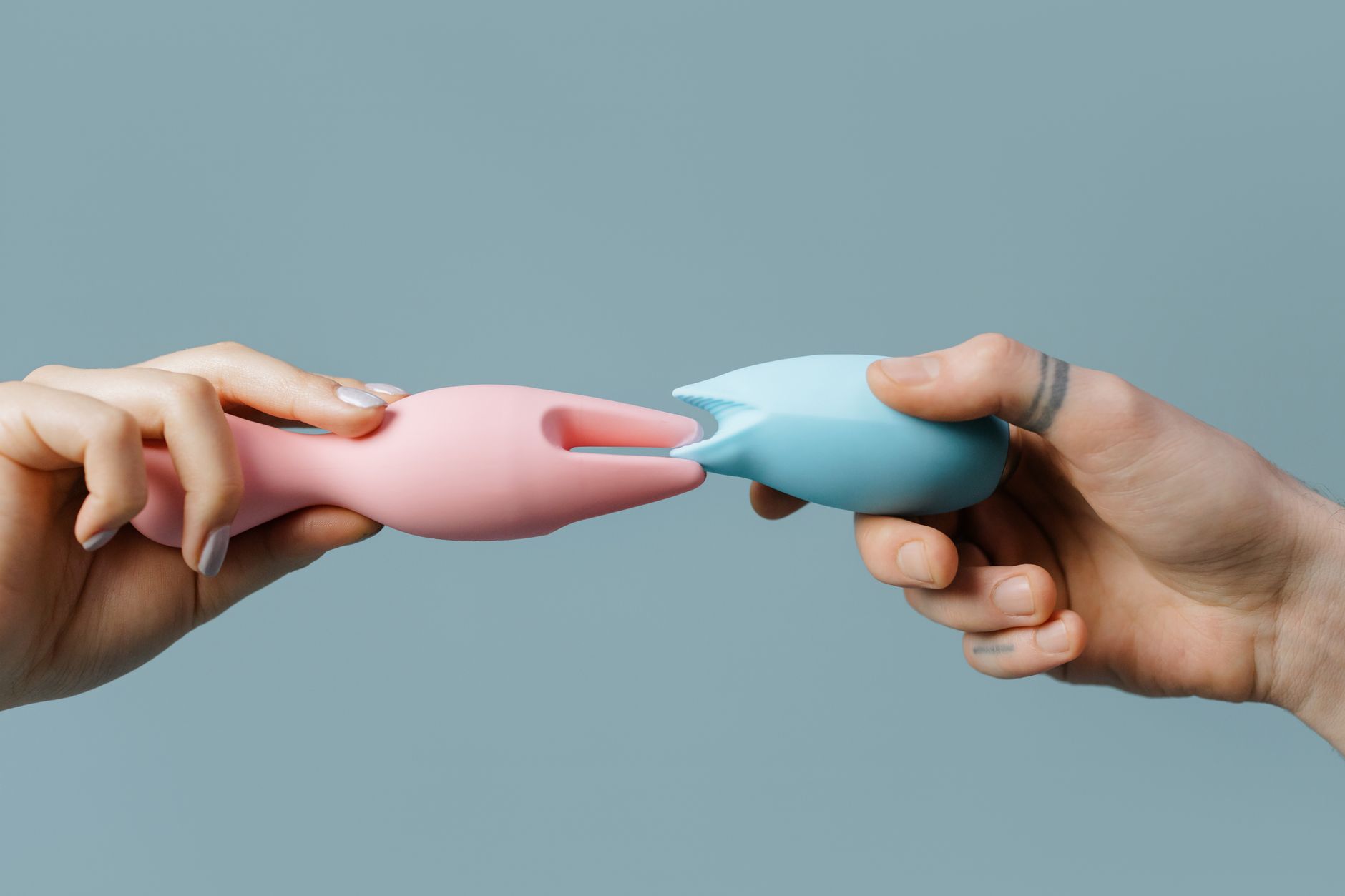
How to Use a Lemon Vibrator When You Want to Rebuild Intimacy After Burnout
Burnout doesn't just drain your energy. It colonizes your nervous system, flipping the switch on desire, making even the thought of pleasure feel like another obligation. You're not broken. Your body is doing exactly what it's supposed to do when you're running on empty.
The thing about rebuilding intimacy after burnout is that you can't willpower your way back to desire. The usual advice, "just relax" or "make more time," misses the point entirely. Your nervous system is in protection mode. It's rationing resources. Pleasure feels like a luxury you don't have bandwidth for.
Here's what changes that: a tool designed to work with your body's current capacity, not against it. Lemon vibrators, especially air-suction models, are genuinely good at this because they don't demand anything from you. They just deliver sustained sensation that your nervous system can slowly learn to trust again.
Understanding burnout's impact on desire
Let's be real about the physiology first. Burnout floods your system with cortisol and depletes dopamine, the neurotransmitter that makes pleasure feel rewarding. Your body isn't withholding desire to punish you. It's conserving resources for survival. The arousal system is literally one of the first things to go offline when you're stressed.
This is why standard foreplay doesn't work when you're burned out. You're not being touched wrong. The touch itself feels like a demand because your nervous system can't process it as pleasure yet. It registers as another thing you have to manage, another person's need, another performance.
The second part that matters: grief. Rebuilding intimacy after burnout often means mourning the spontaneity, the ease, the version of yourself who wanted sex without thinking about it. That's real loss. You can't skip over it by jumping straight to solutions.
Why suction vibrators work differently for burned-out bodies
Lemon vibrators use air-suction technology instead of traditional vibration. This matters more than you'd think when your nervous system is depleted.
With suction, the sensation builds gradually. You're not jolted into arousal. Instead, there's a gentle escalation your body can follow at its own pace. The clitoris gets stimulated without the relentless mechanical buzz that can feel overstimulating when you're already exhausted. It's gentler, steadier, and surprisingly more effective at rebuilding arousal pathways.
Another advantage: suction requires less clitoral sensitivity to trigger response. If burnout has made your body numb to sensation, a lemon clitoral vibrator can work with reduced sensitivity in ways traditional vibrators can't. You're not chasing sensation. You're building it back methodically.
There's also something psychological about it. Because the sensation builds rather than starting at peak intensity, your brain has time to catch up. You're not being ambushed by pleasure. You're being invited into it.
Starting slow when your nervous system is depleted
If you're rebuilding after burnout, here's what I recommend to start:
Solo first, always. When your desire system is offline, partnered sex adds performance pressure you don't need. Solo exploration lets you relearn your body's language without anyone watching. There's no "succeeding" or "failing." There's just sensation.
Set a time limit. Counterintuitively, knowing you have permission to stop helps you stay longer. Ten minutes, once or twice a week. Not because that's the goal, but because it removes the pressure to perform for hours. You're micro-dosing pleasure back into your system.
Low intensity, always. Start on the lowest setting of your Lemon vibrator. Pattern 1 or 2. If nothing happens, that's fine. You're training your nervous system that pleasure is safe again, not forcing a response.
Pair it with something grounding. Many of my clients light a candle, play a specific song, or drink tea beforehand. Your nervous system needs a signal that this time is different from "we should probably try to have sex." It's permission, not obligation.
Rewiring the nervous system after exhaustion
When you're burned out, your brain has learned the pattern: touch equals demand equals performance. You need to rewrite that pattern.
Using a Lemon vibrator solo, consistently, at low intensity, teaches your body something new. It learns that sensation can happen without pressure. That pleasure doesn't require you to be on. That you can feel good and still be depleted, and that's okay.
This usually takes weeks, not days. You might not feel a ton in the first session. Or the fifth. That's normal. Your nervous system is cautious. Let it be. The goal isn't a dramatic orgasm. It's a gradual unfreezing, a slow return to your body.
Here's what I often see: around week three or four, something shifts. Not because the vibrator got better, but because your brain stopped waiting for the catch. Pleasure stopped feeling dangerous. And then orgasms come more easily.
The other thing that shifts is how you think about desire. When you're burned out, not having desire feels like failure. When you've been slowly bringing it back with a tool that works, it feels like recovery. The mental shift matters as much as the physical one.
When to involve a partner again
This is the part most people rush, and it's usually where things fall apart again.
You're not ready to involve a partner until solo pleasure feels easy again. I mean genuinely easy, not "I can make it work if I concentrate." Easy means your nervous system is relaxed enough that you're not holding your breath the entire time.
When you do bring a partner back in, here's what changes: they're not the source of pleasure anymore. They're a presence. You're still using your Lemon vibrator. They're not replacing it. They're beside you, maybe touching you elsewhere, but the pleasure is coming from the vibrator and your own body, not from them trying to make something happen.
This takes massive pressure off both of you. Your partner isn't responsible for "fixing" your desire. You're not responsible for producing arousal on demand. You're just two people learning to be intimate in a way that works right now.
Many couples find this is actually better than their pre-burnout sex. Because there's no pretense. No performing. No pressure. Just honest, low-stakes connection.
Common mistakes when rebuilding intimacy
Trying too hard, too fast. You find a clitoral vibrator that works and suddenly you're using it daily for 30 minutes. Your nervous system panics. It feels like another obligation. Slow, consistent, short sessions beat sporadic longer ones.
Skipping the solo phase. I get it. You want to reconnect with your partner. But if you jump to partnered sex before your own desire has thawed, you're just recreating the same dynamic that burned you out. Your partner still feels like a demand.
Not talking about what's happening. Burnout affects both partners. The exhausted person isn't the only one struggling. Let your partner know what you're doing and why. "I'm rebuilding my desire slowly" sounds better than sudden distance followed by confusing attempts at intimacy.
Using pleasure as a deadline. "Once I can have an orgasm again, I'll feel better." That's not how it works. The orgasm is a side effect of feeling safe again, not the goal. Expect it to take months, not weeks.
When to reach out for more support
If you're rebuilding after burnout and nothing is shifting after two months of consistent, low-pressure exploration, talk to someone. A therapist who specializes in sexual health or couples work can help you understand if there's something else going on: depression, relationship dynamics that are still problematic, medical factors.
If your burnout was relational, meaning your partner was part of the exhaustion, you'll probably need couples work before solo pleasure tools will fully help. Because your nervous system is rightly protecting you from that dynamic.
And if touching yourself doesn't feel safe yet, start smaller. Even skin care, a warm bath, letting yourself rest without guilt. Pleasure rebuilding happens on a spectrum. A lemon clitoral vibrator is one tool, not the only path.
The bigger picture
Recovering intimacy after burnout is really about recovering your body as a place that's yours, not something you owe to other people or other obligations. A Lemon vibrator can be part of that, especially because it's something you control entirely. You choose when, how long, what intensity.
That agency matters more than the tool itself. But when the tool works, it works because it respects where you actually are instead of demanding you perform who you were.
Give yourself months. Give yourself permission to go slowly. And know that on the other side of rebuilding intimacy after burnout is often something better: a version of pleasure that's truly yours, not borrowed from what you think you should want.
People also ask
How long does it typically take to rebuild desire after burnout?
It depends on how deep the burnout was, but I usually see shifts in four to eight weeks of consistent, low-pressure exploration. Some people notice changes faster. Others need three to four months. The key is consistency, not intensity. Two minutes a week is better than nothing. Burnout deeply tired out your nervous system. Pleasure is the opposite of that. It takes time to convince your body that feeling good is safe again.
Can I use a lemon vibrator with a partner while rebuilding after burnout?
Yes, but not immediately. I recommend starting solo so your nervous system can relax without the pressure of someone watching. Once pleasure feels easy alone, you can gradually bring a partner into the room. They're there with you, not to perform or fix anything. You're still controlling the vibrator and the pace. This removes the pressure from your partner to "make" something happen and removes the pressure from you to perform arousal. It's gentler for everyone.
What if I don't feel anything at first when using a clitoral vibrator?
That's completely normal. Burnout creates numbness, sometimes literally reduced sensitivity in the clitoris. Your nervous system is protecting you. Using a Lemon vibrator at low intensity consistently, over weeks, slowly rewires that protection. You're not chasing sensation. You're training your body that pleasure is safe again. Keep the sessions short, low-pressure, and consistent. The feeling will come back.
Is it normal to feel guilty about taking time for pleasure when I'm recovering from burnout?
Yes, especially if burnout came from overextending yourself. Many of my clients feel like taking time for pleasure is selfish when they should be "catching up" on rest or work. Here's the truth: rebuilding your nervous system's capacity for pleasure is not selfish. It's essential recovery. Your body needs to remember that feeling good is possible. This isn't a luxury. It's medicine.
Should I talk to my partner about rebuilding intimacy after burnout?
Absolutely. Your partner needs to understand what's happening and why the dynamic is changing. This isn't about rejection. It's about healing. A simple conversation: "I'm burned out. My desire is offline. I'm slowly rebuilding it on my own first because I need to feel safe in my body again. This doesn't mean I don't love you. It means I need time." Most partners get it. The ones who don't might be part of why you're burned out in the first place.
Can a lemon vibrator help if my burnout is from my job, not my relationship?
Yes, but it's one piece. If your burnout is work-related, the vibrator helps your nervous system reset and reminds your body that sensation and pleasure are still available. But you also need to address the root cause. That might mean boundaries around work, therapy, a job change, or reduced hours. The vibrator isn't a replacement for fixing what burned you out. It's a tool for remembering you're still alive in your body while you do the harder work.
Moving forward
Recovering intimacy after burnout is slow, gentle work. There's no rush. Your Lemon vibrator is there when you're ready, at whatever pace feels right. Your nervous system will tell you when it's ready to feel more. Listen to that signal. It's usually right.
If you have questions about your specific situation or feel stuck in your recovery, reach out. There's no judgment here, just support for getting back to a version of pleasure that's truly yours.