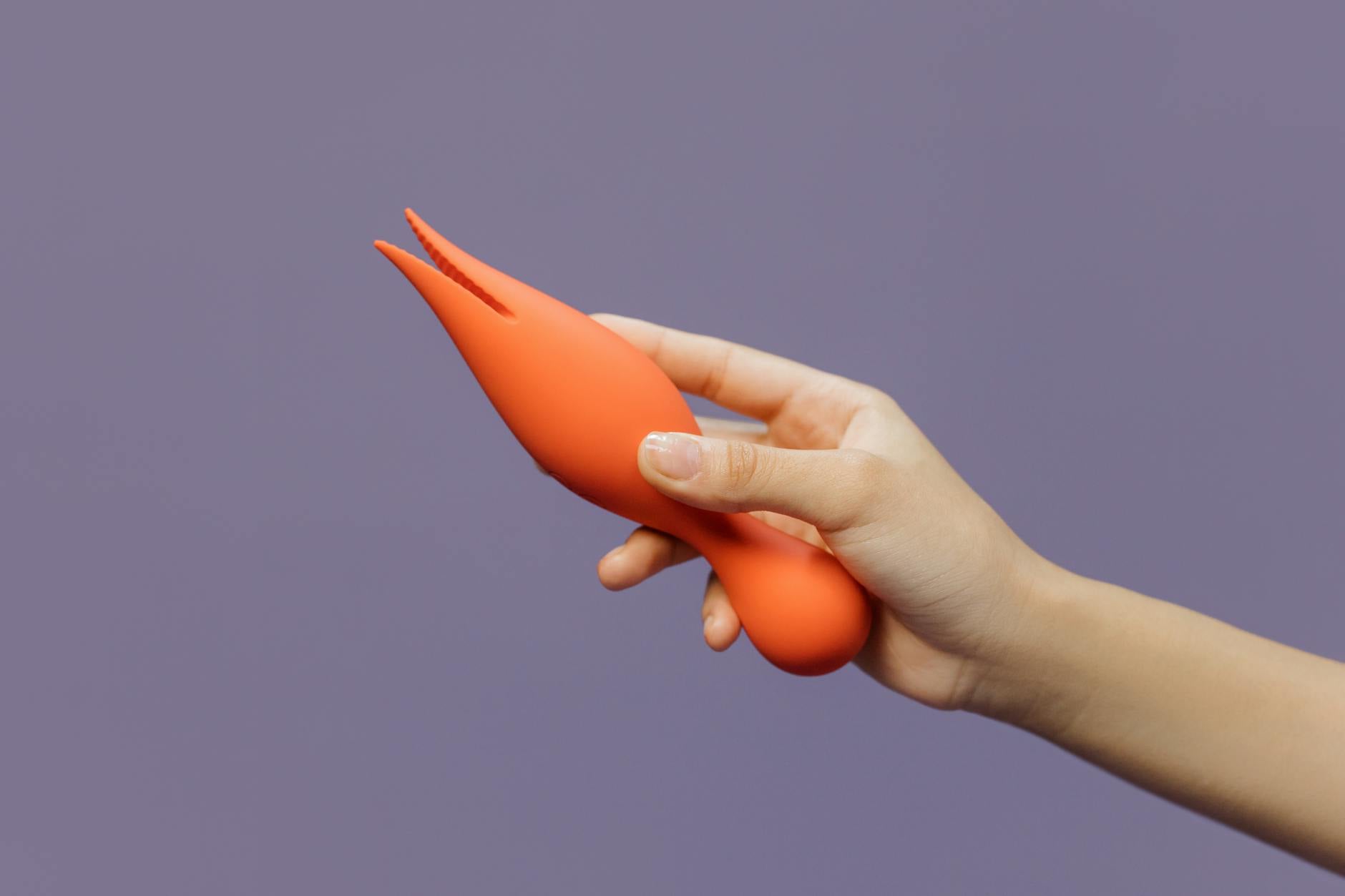
Here's what long-distance couples don't talk about enough
Everyone knows long-distance relationships are hard. What no one really explains is how the physical separation gets under your skin in ways that go beyond just missing someone. You lose the casual intimacy. A hand brushing yours. A kiss that doesn't require scheduling. And without that, a lot of couples find themselves in a weird holding pattern where sex feels so loaded with expectation that it becomes harder, not easier, to connect.
I've worked with dozens of couples navigating this, and one thing keeps coming up: the ones who stay connected sexually are the ones who give themselves permission to explore it differently. That's where tools like lemon vibrators come in.
Why physical distance makes intimacy even more important
When you can't be in the same room, touch becomes the thing you crave most. And the paradox is that the more you crave it, the more pressure you put on the moments you do have together. Every visit becomes about checking boxes. Making it count. Performing connection rather than experiencing it.
That pressure kills desire faster than distance ever could.
What actually helps is flattening that expectation. You need intimacy that's low-stakes. Playful. Something you can do in your own space without the weight of "this has to be perfect because we only have 48 hours together."
This is where lemon clitoral vibrators shift the game. They give you a way to maintain a consistent intimate practice, alone or together, that doesn't require perfect circumstances or enormous blocks of time.
The science of vulnerability across distance
There's actual research on this. Couples who maintain sexual connection during separations report higher relationship satisfaction and lower infidelity rates. It's not magic. It's biology plus psychology. When you're aroused, your brain releases dopamine and oxytocin. Oxytocin is the bonding hormone. It's what makes you feel attached to your partner.
Long distance interrupts that cycle. You're not touching, so you're not generating those neurochemicals, so the bond starts to feel more fragile than it actually is. And most couples respond by either pulling away (to protect themselves) or overloading their limited time together with expectation.
The third option is to introduce a tool that lets you maintain that arousal and bonding practice on your own terms. That's it. No complicated metaphor. Just physiology.
How lemon vibrators actually fit into long-distance intimacy
Let me be specific about what I mean. A lemon vibrator is a clitoral toy. It works through suction and pulsing, which means it's consistent, reliable, and works across a wide range of bodies and sensitivities. For long-distance couples, that reliability matters.
Here's how this actually works in practice:
You develop a shared intimacy practice that fits your real lives. Some couples use their toys independently and text about it. Some schedule times when they're both using a toy while on a call together. Some use it as foreplay before video sex. The specific structure matters less than the consistency.
What matters is that you're maintaining a regular intimate practice that keeps you connected to your own pleasure and, by extension, to your partner. You're not saving up all your sexuality for visits. You're living it throughout the week.
The conversation that has to happen first
Here's the thing: you can't just introduce a lemon vibrator into a long-distance relationship without talking about it. The conversation is actually the most important part.
Most couples struggle because they're trying to protect each other. You think: "If I bring up sex, they'll feel like I'm criticizing our visits" or "They might think I'm interested in them less." So you don't bring it up. And the physical distance becomes emotional distance too.
The conversation needs to be about what you both want the relationship to feel like while you're apart. Not whether toys are "needed." Not whether you're "normal." Just: what would actually help us feel connected?
If the answer includes using tools like lemon sexual toys, great. If it's scheduling regular intimate time, great. If it's both, even better. But the conversation has to come first, and it has to be non-defensive.
Practical structure for couples using toys together across distance
If you both want to explore this, here's what actually works:
Pick a time that works for both time zones. This sounds obvious but it's easy to skip. If one person is on the west coast and one is on the east coast, you need a window where you can both be present at the same time. Early morning or late evening usually works.
Start with the device, not the pressure. When you're first exploring a lemon vibrator or any new tool, don't add the expectation of orgasm. Just get curious about how it feels. This takes the performance pressure completely off and makes the whole thing feel playful instead of goal-oriented.
Communicate about what you're experiencing. This is weird at first. Talking about pleasure feels awkward. But it's the whole point. When you're describing what feels good to your partner, you're building intimacy in a different way. You're being vulnerable. You're telling them what you need.
Expect it to feel awkward the first time. Video sex with a toy involved is objectively strange at first. You're trying to angle your phone correctly while also using a device while also maintaining eye contact. It's ridiculous. Laugh about it. That's where the real connection lives.
Why lemon clitoral vibrators work better than other options for distance
You might be wondering why I'm specifically talking about lemon vibrators rather than any other toy. It comes down to a few things.
First, they're intuitive. Unlike some toys that have a steep learning curve, lemon vibrators work pretty consistently for most bodies from day one. You don't need instructions. You don't need to figure out angles or pressure points.
Second, they're designed for reliable pleasure. The suction mechanism means they work across different vulva shapes and sensitivities without much variation. For someone who's using a toy for the first time across a video call with their partner, that reliability matters.
Third, they're small enough to be discreet but powerful enough to actually deliver. If you're in a situation where privacy is an issue, or if you're traveling for a visit, a lemon vibrator fits in a small bag and doesn't scream "sex toy."
They're also designed with couples in mind. Unlike penetrative toys, a device like this is genuinely useful whether you're alone or with a partner, which is exactly what long-distance couples need.
What happens after the conversation
Once you've started this practice, something shifts. You realize that your partner wants this too. You realize that maintaining sexual connection isn't selfish or weird. It's actually what keeps the relationship alive while you're apart.
Couples who do this consistently report that their visits feel less pressurized. They're not trying to cram a month's worth of intimacy into a weekend. They've been building it gradually the whole time. When they're together, sex is about presence and connection, not performance.
The lemon vibrator becomes just a tool in a larger practice. But it's the tool that made the practice possible.
When to seek help
If you try this and it feels consistently uncomfortable or if it becomes a point of conflict, that's actually useful information. It might mean you need to talk to someone about what's underneath the discomfort. Sometimes distance reveals stuff that needs addressing anyway.
A relationship coach or therapist who specializes in couples' sexual health can help you navigate this in a way that feels right for both of you. There's no universal right answer here. The right answer is whatever helps you both feel connected.
People also ask
Can you use lemon vibrators together on video calls?
Yes. Many couples use them during video calls, and they report it helps them feel present and connected even though they're apart. The key is that you're not trying to sync up perfectly. You're just both engaging with your own pleasure while being in the same space (even if it's virtual). Some couples find it helpful to describe what they're feeling as they go.
How do you bring up using toys with your long-distance partner?
Start with curiosity, not pressure. Try something like: "I've been thinking about how we could maintain more physical connection while we're apart. Have you thought about that?" If they're open to it, you can explore what that might look like together. If they're hesitant, that's information too. Ask what's making them hesitant. Often it's just uncertainty, not actual objection.
Do lemon vibrators feel different when you're using them alone versus with a partner watching?
Yes, usually. The first time you use any toy with your partner present (even virtually), your brain is doing two things at once. It's processing the physical sensation and the vulnerability of being seen. That takes getting used to. After a few times, most people find it's actually less distracting because they're focused on connection rather than just sensation.
What if my partner isn't into toys?
Then that's your answer. But I'd ask: is it that they're not into toys, or are they uncomfortable with the conversation? Because those are different things. Some people come around once they understand that using a toy isn't about preferring it to their partner. It's about maintaining intimacy when you can't be together. A good conversation can shift that. If they're genuinely not interested, there are other ways to maintain connection, but the conversation still needs to happen.
Should we use the same toy or different ones?
Different ones, usually. You each have your own body, your own preferences, your own sense of what feels good. Using your own clitoral vibrator or other toy means you're learning what you like independent of your partner, which actually makes the intimate time you do have together better. Plus, it's more hygienic.
How often should long-distance couples use toys together?
Whatever works for your schedule and your bodies. Some couples do it once a week. Some do it a few times a month. The frequency matters less than the consistency. Your brain needs to know this is a regular practice, not an occasional thing. Once a week is usually enough to maintain that sense of connection.
Long-distance relationships require intentionality. You can't rely on proximity to maintain connection. But that doesn't mean you're destined to feel disconnected. It means you get to decide what intimacy looks like on your own terms. For a lot of couples, that means exploring tools like lemon clitoral vibrators. For others, it means something different. The key is that you're having the conversation and building a practice together. That's what keeps the spark alive.
If you want to explore this further or work through some of the conversations that come up, I'm here. You can reach out anytime.