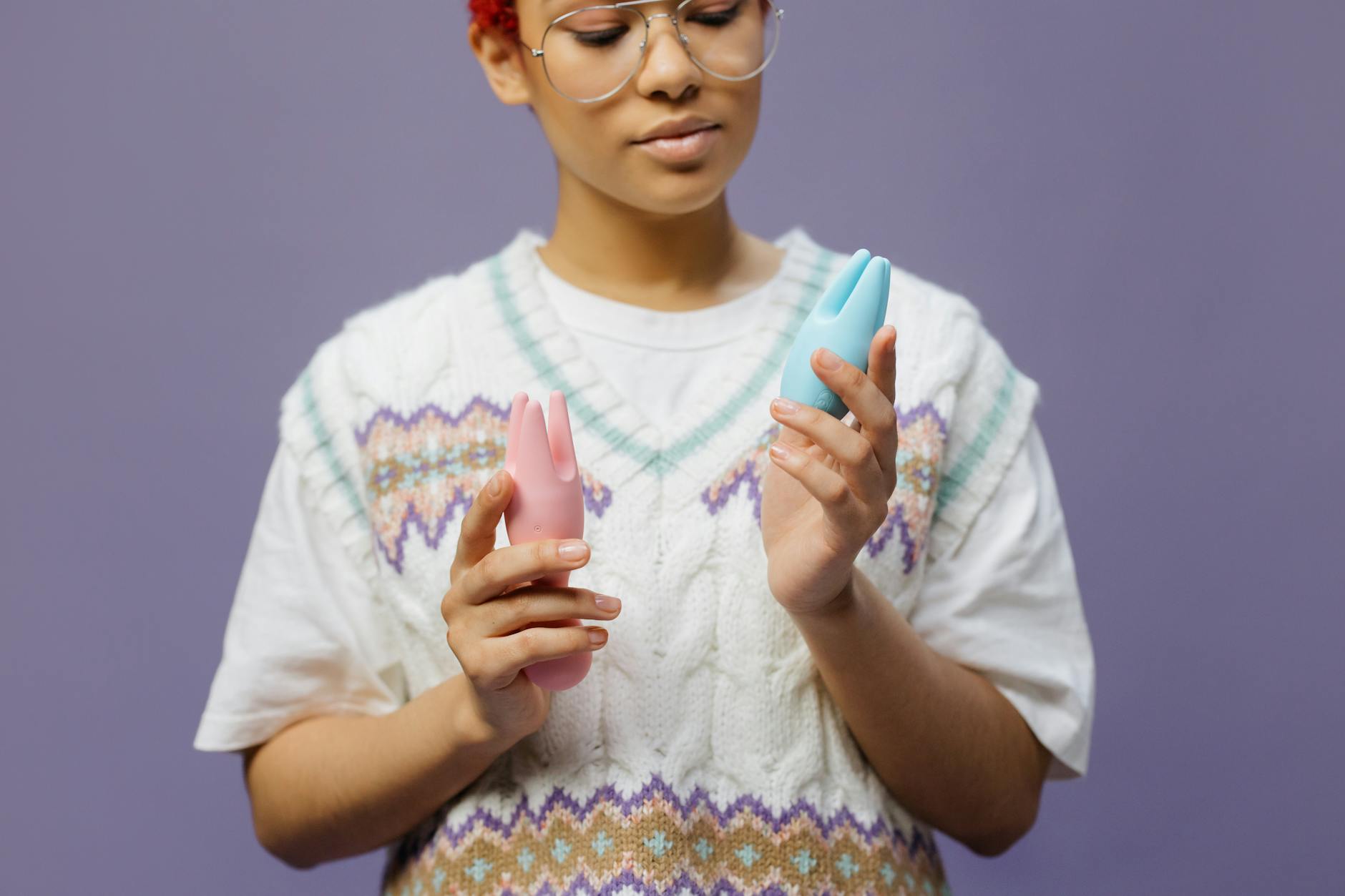
Let's start with the honest part
If direct vibration on your clitoris feels like being struck with a tiny hammer, you're not alone. Between 30 and 40 percent of people with vulvas report that traditional vibrators feel too intense, too numb, or just plain wrong. The assumption is that you're broken or overly sensitive. You're not. You just need a different technology.
This is where lemon vibrators, specifically air-pulse clitoral vibrators like the Lem, change the game. They work differently than standard vibrators, which means they hit differently. Physically, neurologically, and in ways that feel radically better for sensitive anatomy.
How standard vibrators actually work
Most vibrators oscillate side-to-side or up-and-down at speeds ranging from 1,000 to 15,000 oscillations per minute. That movement creates direct friction against tissue. For some people, this is perfect. For others, it's overwhelming. The stimulation is mechanical and unrelenting.
Here's the problem with direct friction on sensitive tissue: the clitoris has 8,000 nerve endings concentrated in a space the size of a pea. Add direct pressure, and the nerve endings get overstimulated fast. The sensation reads as too intense, too numb (numbness happens when you overstimulate and the nerves temporarily shut down), or somewhere in between. Some people describe it as white noise instead of a signal.
How air-pulse technology changes the equation
Lemon clitoral vibrators like the Lem work on a completely different principle. Instead of oscillation, they use air-pulse suction. The technology gently draws the clitoral hood and surrounding tissue into a soft opening, then releases it in rhythmic waves. It's stimulation without friction.
This matters because your clitoris isn't just the visible pearl at the top. It's a wishbone-shaped structure that extends internally, with roots that wrap around your vaginal canal. Air-pulse technology stimulates the entire clitoral complex at once, not just the surface. The sensation is more distributed, less concentrated, and dramatically less likely to become overwhelming.
Physiologically, suction activates different nerve pathways than direct vibration. Instead of the mechanical pressure of oscillation, you're getting gentle negative pressure and release. Your body interprets this as a completely different kind of touch. Many people report that air-pulse vibrators feel more like oral sex than a traditional vibrator.
Why sensitive tissue responds better
There are three reasons sensitive clitorises respond better to lemon sexual toys with air-pulse technology.
First: graduated intensity without pain. The Lem has multiple intensity levels. Starting at level one, the sensation is so gentle that many people can use it indefinitely without fatigue or numbness. With a standard vibrator, level one might still feel too strong. The progression on air-pulse devices is gentler because the technology itself is less abrasive.
Second: broader stimulation area. The opening of the Lem covers more surface area than a vibrator tip. This distributes sensation across the entire clitoral hood instead of concentrating pressure on a single point. Sensitivity issues often come from point-pressure overload. Broader coverage solves that.
Third: the nervous system doesn't adapt as quickly. Vibration activates the same mechanoreceptors repeatedly in the same pattern. Your nervous system learns to tune it out. Suction pulses in a different way. They activate pressure receptors and movement receptors in a pattern your nervous system doesn't habituate to as fast. This means you stay in sensation instead of sliding into numbness.
What the research actually shows
Studies comparing traditional vibrators to air-pulse clitoral vibrators consistently show that air-pulse devices produce orgasms with higher reported satisfaction and shorter time-to-orgasm in first-time users. One 2019 study found that 80 percent of people who reported difficulty with traditional vibrators found air-pulse technology significantly more pleasant.
Anecdotally, people often report that they can reach orgasm on air-pulse devices when they couldn't on traditional vibrators at all. This isn't because they're "better." It's because they're different. The technology is simply a better match for certain nervous systems and anatomies.
For people with vulvodynia, post-surgical sensitivity, or heightened nerve reactivity, air-pulse technology is often the first thing that works.
Common mistakes people make with lemon clitoral vibrators
Sensitivity issues get worse when you use air-pulse toys incorrectly. Here are the biggest mistakes I see.
Starting too high. The first impulse with a new toy is to crank it to see what it does. Resist that. Start at level one. Spend three to five sessions just getting used to level one. Your body will adapt and the sensation will become richer.
Using it without lubrication. Air-pulse devices work best with a thin layer of water-based lubricant around the opening. The lube helps create a better seal and smooths the sensation. More importantly, it prevents the toy from pulling at sensitive skin.
Holding it too still. Unlike vibrators, air-pulse toys often benefit from small movements. Micro-adjustments of angle or position can completely change the sensation. Experiment.
Not giving your body time to adjust. Sensitivity often means your nervous system is hypervigilant. It takes three to five uses before your body learns to relax into the sensation. Patience is not optional.
Lemon vibrators for partners and solo play
Because air-pulse devices don't require direct friction, they're also excellent for partner play. You can use them during penetration without worrying about overstimulation. They're quieter than many vibrators, which helps if noise is a concern. And the suction sensation is novel enough that many couples find it more engaging than a standard vibrator.
For solo use, the fact that lemon sexual toys don't numb you out as quickly means longer, more satisfying sessions. You're not fighting against your own nervous system's adaptive response.
When to see someone about clitoral sensitivity
If sensitivity is painful rather than just intense, talk to a gynecologist. Vulvodynia, dermatological issues, and hormonal factors can all create touch-aversion that a different vibrator alone won't solve. A lemon clitoral vibrator might help, but you need a diagnosis first.
If you've been avoiding pleasure because standard vibrators don't work, try air-pulse technology before you assume you're not someone who enjoys vibrators. The tool matters. The Lem and similar devices are designed specifically for sensitive anatomy. Give your body a chance to work with the right technology.
FAQ: Lemon Vibrators and Sensitive Clits
Are lemon vibrators safe for very sensitive skin?
Yes. Air-pulse devices don't create the friction that can irritate sensitive skin. That said, always use water-based lubricant, start at the lowest setting, and stop if you experience pain. Sensitivity and pain are different. Sensitivity is normal. Pain is a signal to check in with a healthcare provider.
Can I use a lemon sucker vibrator if I have vaginismus?
Often, yes. Because air-pulse toys don't require penetration and the sensation is gentler, many people with vaginismus find them less triggering than traditional vibrators. Start slowly and listen to your body. If it's still too much, work with a pelvic floor physical therapist alongside toy exploration.
How do lemon sexual toys compare to wand vibrators for sensitive clits?
Wand vibrators are designed for broader external stimulation, so they're less focused than clitoral vibrators. Many sensitive people prefer wands for this reason. Air-pulse clitoral vibrators offer more intensity in a smaller area, but without the direct friction of traditional vibrators. Some people need both.
Will a lemon clitoral vibrator help if I've never been able to orgasm?
Possibly. If you haven't been able to orgasm because standard vibrators were overwhelming, air-pulse technology might be the missing piece. If you haven't been able to orgasm for other reasons (anxiety, trauma, medication effects, disconnection from your body), a toy alone won't fix it. Consider exploring your pleasure cycle alongside using a new device.
How is the Lem different from other air-pulse devices?
The Lem is designed for maximum comfort around sensitive anatomy. It has a soft silicone cup, multiple intensity levels, and a shape that fits the clitoral hood without requiring perfect positioning. Other air-pulse devices on the market are good too. The key is finding one that feels right for your body.
Can I use an air-pulse vibrator during penetration?
Absolutely. Because it doesn't vibrate, it doesn't interfere with a partner's movement. Many couples find air-pulse clitoral vibrators ideal for partner sex because they provide external stimulation without the mechanical distraction of traditional vibrators.
The bottom line
If standard vibrators have never worked for you, sensitive tissue isn't your problem. The technology just wasn't a match. Lemon vibrators, specifically air-pulse clitoral vibrators, work on a completely different principle. They distribute sensation differently, activate different nerve pathways, and feel genuinely different in your body. For sensitive anatomy, that difference is everything. Your pleasure isn't broken. You just needed the right tool.