Here's the thing nobody talks about enough
Your pleasure response isn't a fixed setting. It's responsive. Which means when your partner changes, your body doesn't just notice the difference. It responds to it completely differently. And that's not a problem to fix. It's just your nervous system doing exactly what it's designed to do.
The shift can feel alarming though. You know what good feels like with one person. Then suddenly, with someone new, the same touch lands differently. The same rhythm that worked before feels off. Your body takes longer to warm up. Or it shuts down entirely. You start wondering if something broke in you, when actually nothing broke. The container changed.
Why sensation changes between partners
Think of pleasure like a nervous system conversation. Your body isn't just responding to physical touch. It's picking up on trust, tone, timing, and a thousand micro-signals from the other person. When a new partner enters the picture, all of those variables shift at once.
Here's what I see clinically. With a long-term partner, your nervous system has learned their baseline. You know how they typically touch you. You anticipate their rhythm. Your body relaxes into that predictability, which actually deepens sensation. Then someone new arrives and that predictability evaporates. Your nervous system goes into a slightly heightened state, scanning for information. That scanning state feels like numbness or disconnection, but it's actually your body being cautious.
Add in the emotional layer. You might feel vulnerable with a new partner. Or you're monitoring whether they like you. Or you're carrying worry about being judged. All of that brain noise dampens physical sensation directly. The clitoris is incredibly sensitive to psychological context. Anxiety, doubt, or self-consciousness doesn't just feel bad emotionally. It literally changes blood flow to the area, which changes sensation.
The role of comfort and trust
Trust isn't a feeling that switches on overnight. It's built in tiny moments. Your new partner learns how you like to be touched. You learn that they listen when you redirect them. You both start moving together instead of one person performing for another. That takes time.
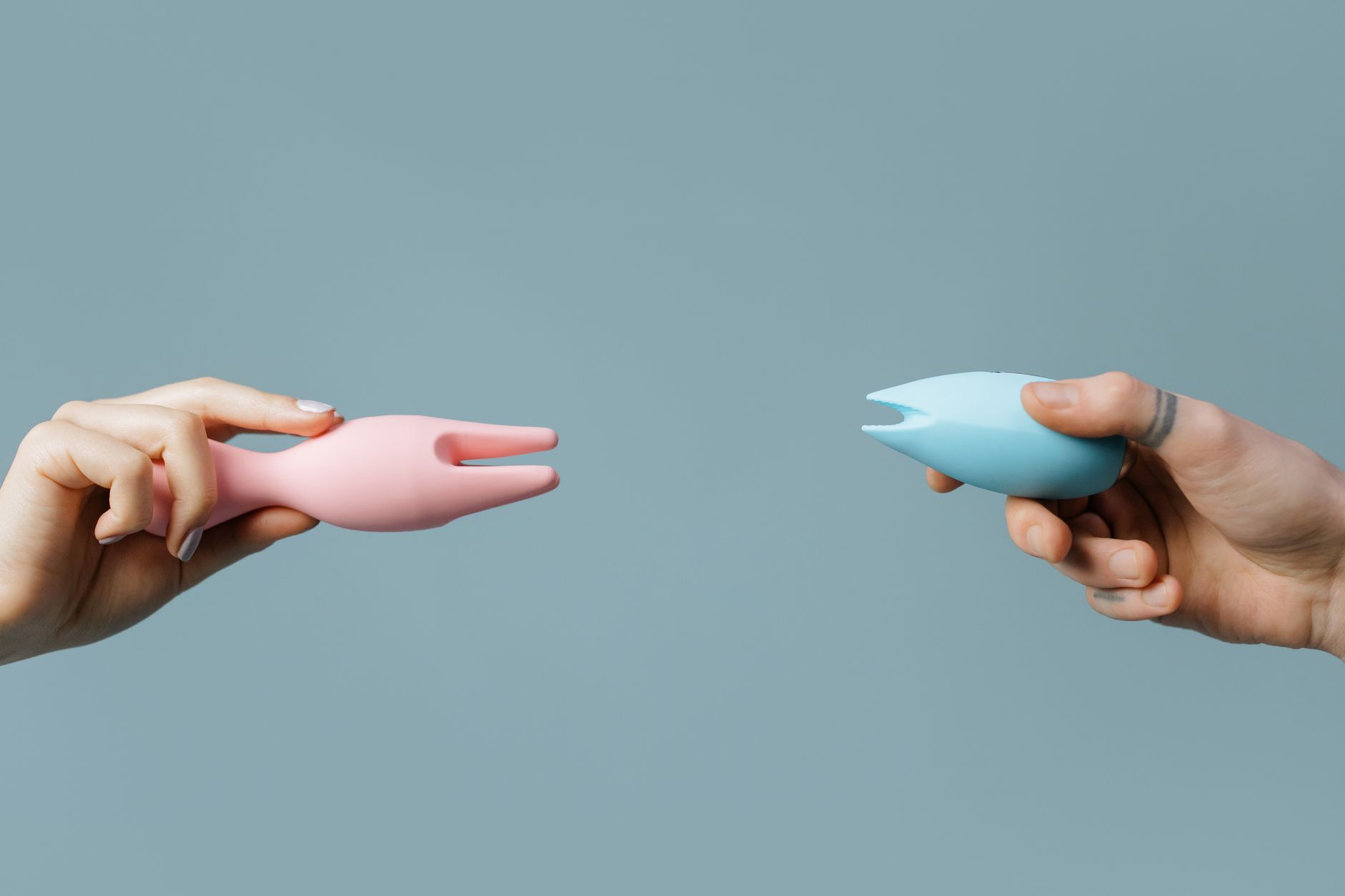
While you're building that trust, your body is still your home. And that's where a lemon clitoral vibrator becomes useful. Not because you need stimulation to be "easier," but because you get to stay in relationship with your own pleasure, regardless of what's happening between you and your partner.
When you use a lemon vibrator solo or during partnered sex, you're not sidelining them. You're anchoring yourself. You're saying: "This is what I know about my own body. This is what feels good to me, independent of what's happening around me." That clarity actually helps partners understand you better. It gives them concrete information about your pleasure instead of vague uncertainty.
How to use a lemon vibrator when pleasure shifts
Start solo first. Get reacquainted with your body before bringing someone new into the equation. Spend 10-15 minutes with a lemon vibrator alone, at low intensity, just noticing. This isn't goal-oriented. You're not trying to orgasm. You're establishing a baseline of what feels like home in your own body. This matters more than you probably think.
Know your settings like you'd know your own name. If you're reaching for a lemon vibrator during partnered sex, you want to know instinctively which pattern feels steadying. Are you drawn to the rhythm patterns at lower speeds, or do you need the suction intensity turned up? Figure this out alone so you're not fumbling in the moment, or worse, giving attention to the toy instead of the person you're with.
Use it to build confidence, not to replace presence. Some people worry that introducing a vibrator signals "you're not enough." The opposite is true. A lemon sucker is often the clearest way to say: "I know what I want, and here's how we can both get there." Partners who are secure usually find that incredibly hot. It's clarity. It's self-knowledge.
Communicate what's actually happening. If pleasure feels inconsistent because you're nervous or overwhelmed, say that. Don't pretend the vibrator is purely a physical preference when the real issue is emotional. Those are two different problems. One needs a toy. The other needs conversation. Sometimes both.
What to actually say to a new partner
Look, I know this feels scary. But here's what works: "My pleasure responds to the dynamic between us. With you, I'm still learning what feels right. I'd like to use a vibrator sometimes because it helps me stay connected to myself and to you. It's not about you not being enough. It's about me knowing what I need."
If they push back, that's information. A partner who feels threatened by your self-knowledge isn't ready to be intimate with a whole person. They want a reflection. And you don't want to be that.
Most people respond well to directness here because it removes the guesswork. They're not trying to hit some invisible target. They can see exactly what creates pleasure for you. That takes pressure off them too.
Why lemon vibrators work specifically for this
A lemon clitoral vibrator, or lem vibrator, works through suction rather than repetitive vibration. That distinction matters when you're in a nervous state. Suction patterns tend to feel grounding. They're rhythmic without being harsh. And they're consistent in a way that human touch, however skilled, simply can't be. That consistency can actually help your nervous system relax into partnered sex because you have that steady anchor.
If you're exploring suction toys for the first time, this dynamic becomes even more important. You're learning a new sensation language while also negotiating a new relationship dynamic. That's a lot. A lemon vibrator lets you separate those two learning curves.
Building consistency back in
Here's what I tell people: Pleasure consistency doesn't come from the toy. It comes from knowing yourself. It comes from trusting your partner enough to ask for what you need. And it comes from a nervous system that feels safe enough to open.
The vibrator is a tool in that process, not the whole solution. Use it to stay anchored to yourself while you and your partner build that trust. Use it to gather information about what you actually want, so you can communicate it clearly. Use it to say "my pleasure matters" out loud, even if you're just saying it to yourself.
Over time, as the relationship deepens, some people find they need the vibrator less during partnered sex. Others use it forever and that's equally valid. The point isn't to graduate away from it. The point is to know yourself well enough that whatever you choose feels deliberate instead of desperate.
If you're managing pleasure shifts after other kinds of relationship changes, this same principle holds. Your body isn't broken. The container changed. You're just learning the new shape.
Common questions about vibrators and new partners
Can using a vibrator solo make partnered sex feel less intense?
No, but your nervous system might feel different sensations from different sources. Solo vibrator use is a completely different experience from partnered touch. One isn't better or worse. They're just different conversations with your body. Alternating between them actually helps you stay flexible and responsive to both.
What if my new partner feels insecure about me using a vibrator?
That insecurity is real and valid, but it's not your problem to solve by hiding part of yourself. What you can do: have a conversation about what the vibrator means to you. Explain that it's not a replacement. Invite them into the experience if they're open to it. And recognize that if they need time to warm up to it, that's okay. But they don't get to decide that you can't have it.
Does consistent vibrator use numb my body?
Not if you're using it thoughtfully. The numbness concern is usually about frequency and intensity, not vibrator use itself. If you're using a lemon clitoral vibrator daily at maximum intensity, sure, you might notice desensitization. But regular use at moderate settings, with breaks, typically doesn't cause lasting changes. Your body is remarkably adaptable.
How do I introduce a vibrator to a skeptical partner without it being weird?
You already know how: honest conversation. "I've been exploring what feels good to me, and I'd like to try this with you because I think it would enhance things for both of us." If you frame it as enhancement rather than compensation, most partners come around. And if they don't, that's data about whether you're sexually aligned.
Should I mention past partners when introducing a vibrator?
No. This is about you and this person building something together. Referencing what worked with someone else usually creates comparison and defensiveness. Keep it forward-looking and specific to your current dynamic.
What if the lemon vibrator is too intense for me during partnered sex?
Start at the lowest setting and work up. Some people only use it for a few seconds at a time, just enough to deepen sensation before switching focus back to their partner. You don't have to use it continuously. You're in control of the intensity and timing, which means you're in control of how vulnerable or connected you want to feel in that moment.
The bottom line
Pleasure isn't meant to be the same across every context and every relationship. It's meant to evolve. Your body is supposed to respond differently to different people and different situations. The only consistency that matters is your commitment to knowing yourself well enough to communicate what you need.
A lemon vibrator helps with that. It's a way of saying: I know my body. I'm not guessing. I'm not waiting for you to figure me out. Here's what I've learned. Can we explore from here.
That's not selfish. That's honest. And most relationships built on honest bodies turn out to be pretty good ones.