
Here's what nobody tells you about new relationships and pleasure tools
The vulnerability isn't about the toy. It's about revealing that you know what you want and that you're willing to ask for it. That's the part that feels exposed. A lot of people worry their new partner will think they're too demanding, too much, or somehow broken. Then there's the flip side of the coin: wondering if introducing something new means the partner will feel inadequate or replaced.
Both fears are real. Neither one requires you to stay silent.
The conversation happens before the toy enters the room
This is non-negotiable. Springing a lemon vibrator on someone mid-intimacy isn't adventurous. It's a betrayal of their consent, and it plants a seed of resentment that's hard to uproot later. You want your partner to feel included, not ambushed.
The best time is outside the bedroom, when you're both clothed and calm. Not during an argument. Not when you're both already aroused. Pick a moment when you have space to think, respond, and ask questions.
Here's what I'd actually say (or something close):
"I've been thinking about adding something to our sex life that would help me feel more pleasure. I have a clitoral vibrator called a Lemon Vibrator that uses suction instead of vibration. I'd love to try it with you. I want to check in first because I care about how you feel about it."
That's it. No apology. No overexplaining. No shame.
Why this phrasing works
You're naming what you want (more pleasure). You're giving your partner a concrete object to imagine, not some abstract "toy." You're telling them it's designed specifically for clitoral pleasure (which is anatomically facts, not opinion). And you're explicitly asking for their thoughts instead of assuming they'll be fine with it.
The last part matters most. A lot of new partners are relieved to hear you want more pleasure. Some are curious. Some need time to sit with it. Some have insecurities that come up, and those insecurities are useful information about what you'll need to talk through together.
What your partner might actually say (and what it means)
"I love that. Let's try it." This is the easy one. They're excited, curious, or both. You get to enjoy their enthusiasm and move forward. Even so, take the first few times slowly. Let them watch, help you find the right intensity, see how your body responds.
"That's weird. I thought I was enough." This usually means they're feeling insecure or scared of being replaced. This is a conversation, not a deal-breaker. You might say something like: "You are enough. That's exactly why I want to explore this with you. Pleasure isn't about you being replaced. It's about both of us learning what makes me feel good so we can build that together."
"I don't know. I need to think about it." Respect that fully. Give them time. They might come back tomorrow or in a week. If they come back with concerns, listen without defending yourself. "That doesn't work for me" is also a valid answer, and then you both get to decide what that means for your sex life.
"I'm not comfortable with that." Okay. This is information. You get to decide whether this is a dealbreaker for you or whether you're okay using a lemon clitoral vibrator solo. Both are legitimate choices. Some people come around after time passes. Some never will. Both of those are okay.
The first time might feel awkward, and that's normal
You're introducing a new object, a new sensation, and a slightly shifted power dynamic (you're asking for something specific). Your nervous system is going to register that as new and possibly unsafe, even if you're excited.
Here's what I recommend:
Start with your partner watching, not participating. You use the lemon vibrator on yourself while they're nearby, present, and interested. This removes the pressure of performing for them while also giving them a front-row seat to how it works and how your body responds. It's incredibly intimate without the performance pressure.
Name what you're feeling. "This feels vulnerable." "I'm a little nervous." "This is really good." Your partner can't know what's happening inside you unless you say it out loud. When you narrate your experience, you're teaching them about your pleasure and also normalizing honesty about bodies and sensation.
Start low. If you're using a lemon vibrator for the first time with a partner present, begin on a lower intensity setting. You want to feel confident, not overwhelmed. Overwhelm reads as discomfort to a partner, and it can make the whole experience feel fraught instead of connected.
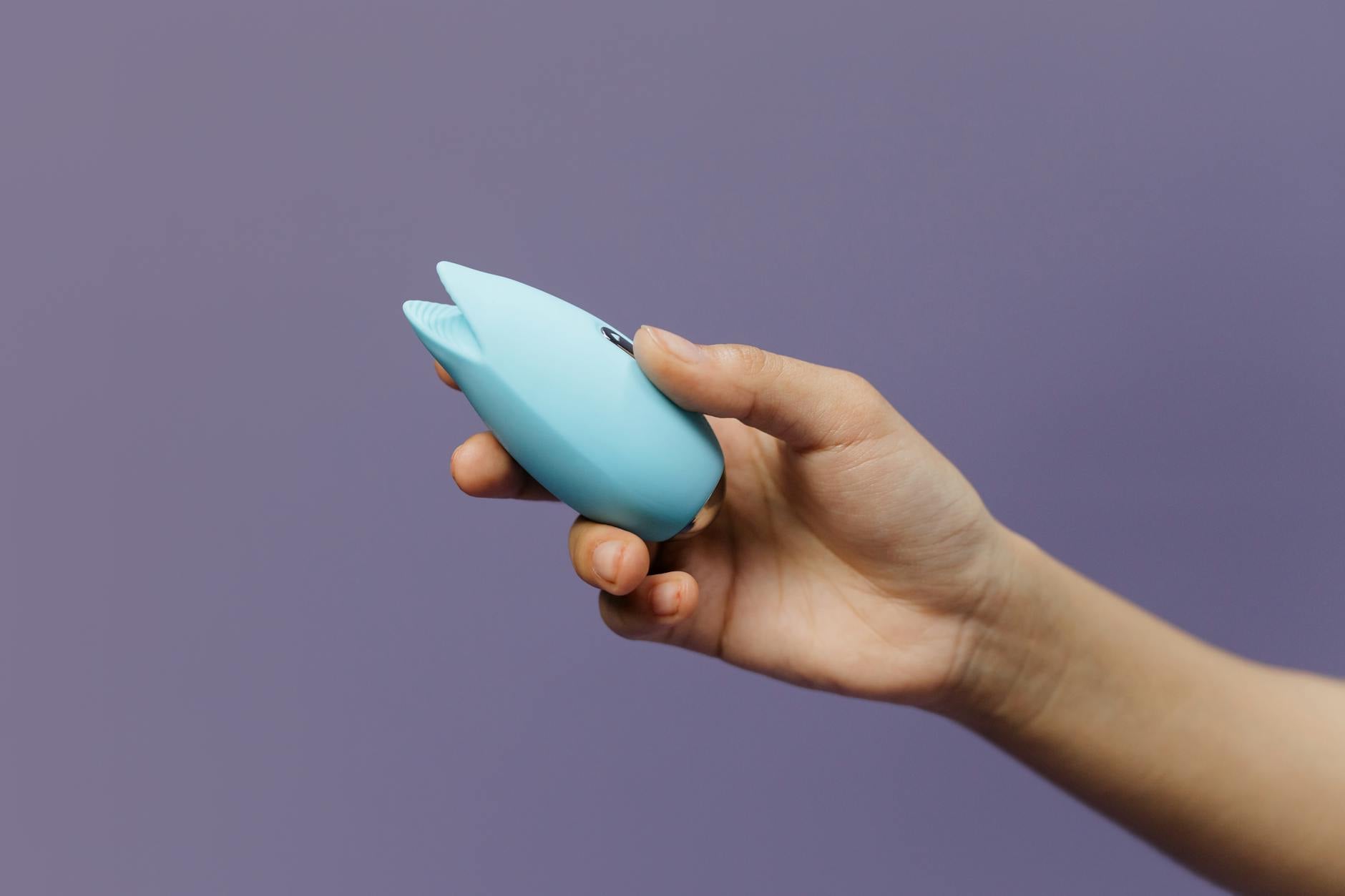
Photo by cottonbro studio on Pexels
When they want to participate, here's how to guide them
After the first time or two, your partner might ask if they can help or use the lemon vibrator on you. This is the moment where you get to be very specific about what feels good.
Suction toys like a lemon vibrator work differently than vibration. Your partner might assume intensity equals pleasure, so tell them: "Slower feels better for me right now," or "A little more pressure," or "Keep the same speed." People who haven't used suction toys before sometimes treat them like vibrators (fast and intense). That's not the same experience.
You can also guide them by touch. If they're holding it and you want something different, put your hand on theirs. This is collaborative and hot, not critical.
What happens if jealousy or insecurity shows up
It might. Sometimes months in, a partner who said they were fine with a lemon vibrator suddenly mentions that watching you use it made them feel insecure. This doesn't mean you did anything wrong. It means something in their own body image or relationship fears got triggered.
Here's the conversation:
"When you said you felt insecure, I want to understand that better. Can you tell me what that felt like?" Then listen. Don't fix it immediately. People often just need to be heard first.
Then you might say: "Here's what's true for me. Using this tool doesn't change how much I want you or how attracted I am to you. It's actually helping me understand my own body better, which means I'm more present and more responsive with you." That's usually true. Pleasure literacy is a gift to a partner.
If the insecurity is persistent and creating distance, that's worth exploring with a couples therapist. It's not a red flag about the toy. It's useful information about what your partner needs to feel secure.
The long game: how this actually deepens connection
Here's what I've seen happen repeatedly with couples who navigate this well. The vulnerability required to ask for what you want starts a chain reaction. Your partner sees you're willing to risk discomfort for honesty. Then they feel safer asking for what they want. Communication deepens. Sex becomes less about performing and more about actual connection.
A lemon vibrator is just a tool. But the honesty required to introduce it? That's relationship medicine.
FAQ: Questions people actually ask
What if my partner says no and I really want to use a vibrator?
Then you have a choice. You can use it solo, and your partner doesn't need to be involved. You can also ask your partner if there's a specific concern you can address, or whether they might be open to revisiting the conversation in six months. What you can't do is sneak it in anyway. That erodes trust faster than almost anything else.
Should I disclose that I used a vibrator solo before we met?
You don't owe a complete sexual history. But if you're introducing one now, it's reasonable for your partner to ask where this is coming from. "I've used one before and I know it helps me feel more pleasure" is honest without oversharing your ex-partner details.
What if they want to use it on me but I'm not comfortable with that yet?
Say that. "I want to get more comfortable with it solo first, then maybe we can try together later." There's no timeline you need to hit. Comfort builds trust, and trust makes everything better.
Can a lemon clitoral vibrator make it harder for me to feel pleasure without one?
No. This is a myth. Using a suction toy doesn't desensitize you or create dependency. What it does do is teach your body what strong, focused stimulation feels like. That knowledge doesn't go away. You can access pleasure with or without tools.
How do I bring it up if we've already had awkward sex?
Even easier. "Remember how things felt a little off last time? I've been thinking about what would help me feel more present and excited. I think using a clitoral vibrator might help." Honesty after a mismatch is actually a gift. It means you're committed to getting better, together.
What if I want to use it and they do too, but we're not sure how?
Start with solo use while they watch. Then try them using it on you while you're lying still and they're doing the work. Then, if you want, you can guide them or hold it together. There's no "right way." There's only what feels good to both of you.
The real vulnerability is saying what you want
Introducing a lemon vibrator to a new partner isn't actually about the toy. It's about deciding that your pleasure matters enough to ask for it, and that the person you're with deserves to know who you actually are. That's the brave part. The toy is just the conversation starter.
If you're ready to have this conversation, start with honesty and notice what your partner actually says, not what you fear they'll say. Most people are more open than you think. And if they're not, that's information too. Learn more about how to build confidence in new relationships.
Read more on deepening intimacy
Want more on communication in early relationships? How to Use a Lemon Vibrator When You Want to Deepen Pleasure With a Partner covers how to keep connection strong as intimacy evolves. You might also explore How to Use a Lemon Vibrator When Your Brain Won't Shut Off if anxiety shows up during sex, or How to Use a Lemon Vibrator When Stress and Anxiety Kill Your Libido for managing bigger emotional blocks.